Their Story
Secundian held power as a prominent senator in Rome. Marcellian and Verian were educated scholars—men of influence and privilege during Emperor Decius's reign. Yet they shared a terrible burden: they were zealous persecutors of Christians, hunting believers with the same intensity they pursued intellectual pursuits. Their hands weren't clean. Their consciences, however, were restless.
Then came the turning point—a moment of grace wrapped in ancient poetry. Reading Virgil's *Eclogue 4*, these three men encountered something that shattered their certainties. The pastoral verses, cryptic and prophetic, opened their eyes to a truth they'd been avoiding: the God they'd been fighting against was real, and calling to them. It wasn't a dramatic vision or a miraculous sign—it was a poem. Sometimes transformation arrives quietly, through words on a page.
They didn't hesitate. They sought baptism from the priest Timotheus and received confirmation from Pope Sixtus II himself. But choosing Christ meant choosing death. Emperor Decius showed no mercy for turncoats. The prefect Valerian arrested all three, and around 250 AD, they were decapitated near Civitavecchia. Their bodies were cast into the sea—a final indignity meant to erase them. Instead, they became unforgettable. A man named Deodatus recovered their remains and gave them proper burial, ensuring their legacy would endure. Tuscania would eventually claim them as its protectors.
Why People Pray to Secundian, Marcellian and Verian
People turn to Secundian, Marcellian, and Verian when they struggle with radical change—when they've lived one way and need permission to become someone entirely different. Their story speaks to those trapped in systems of power or complicity, wondering if redemption is still possible. They intercede for scholars and intellectuals seeking truth beyond conventional wisdom, and for anyone whose conversion cost them dearly.
Lasting Impact
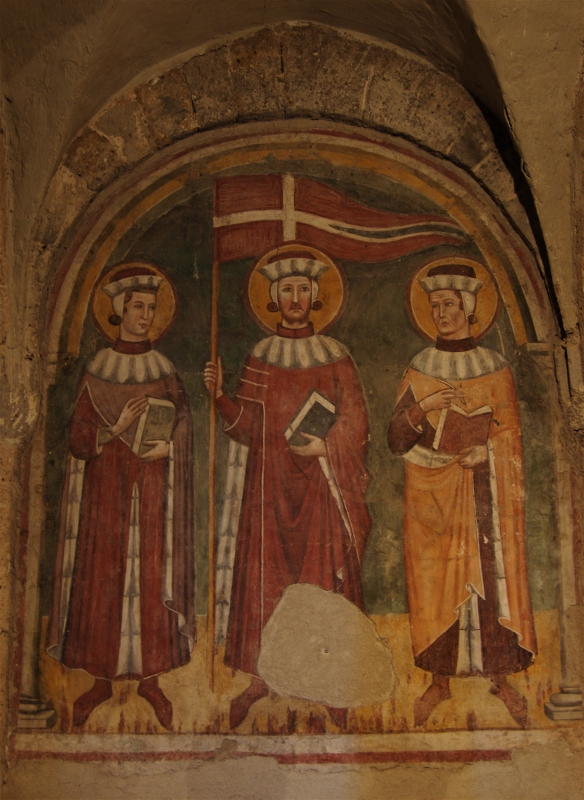
These three saints remain powerful symbols of intellectual awakening and spiritual courage. Their story—preserved in 14th-century frescoes in San Pietro, Tuscania—reminds the faithful that no one is beyond transformation. They prove that privilege and position mean nothing compared to the radical freedom of choosing truth, even unto death.