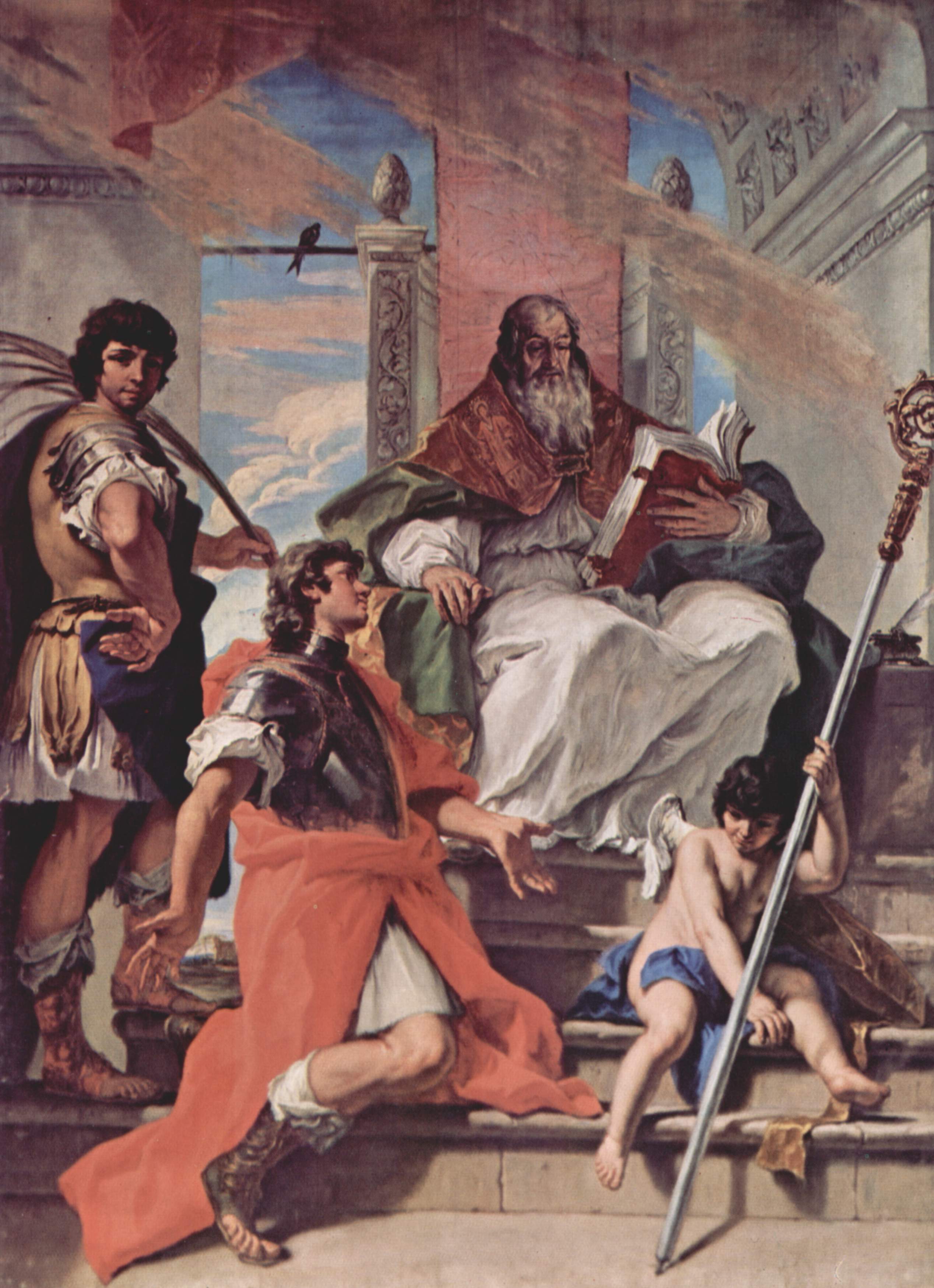
Their Story
Firmus was a man of rank and station—a soldier accustomed to obedience, hierarchy, duty. For years, he navigated the treacherous politics of Roman Bergamo, keeping his faith private, manageable, unseen. He had much to lose: status, security, his life. When Maximian's persecution swept through Italy around 290 AD, Firmus faced arrest not as a hero, but as a terrified man watching his careful world collapse.
His kinsman Rusticus, seeing Firmus captured, made a choice that defined them both: he stepped forward in greeting—a gesture of solidarity that sealed his own fate. Two relatives, bound by blood and conviction, were dragged to Milan, then to Verona. Under the judge Anolinus, they endured torture, beatings with clubs, systematic brutality designed to break their will. The interrogators demanded one simple act: sacrifice to the pagan idols. One gesture. One compromise. Freedom.
They refused. Not with theatrical martyrdom, but with the quiet, stubborn dignity of men who had already chosen what mattered most. Their beheading in 290 AD was not triumph—it was loss, erasure, pain. Yet something in their refusal refused to die. By 800 AD, their veneration had spread across Italy. They became saints not because suffering ennobled them, but because they proved that conviction matters more than survival. Two ordinary men transformed into eternal witnesses that some things cannot be bought, threatened, or tortured away.
Why People Pray to Firmus and Rusticus
In an age of compromise, people turn to Firmus and Rusticus when facing impossible choices—moments requiring integrity over comfort, conviction over convenience. They inspire those resisting pressure to abandon their values, whether facing professional coercion, social pressure, or institutional demands to betray their conscience. Their feast day (August 9) reminds us that quiet, determined faithfulness—not dramatic gestures—is what changes history.
Lasting Impact
Venerated across the Catholic and Orthodox churches, Firmus and Rusticus transformed from local Bergamese citizens into symbols of conscientious resistance. The magnificent San Fermo Maggiore in Verona preserves their relics and medieval artistic tributes, ensuring their witness endures. They teach that ordinary people—soldiers, kinsmen, neighbors—become saints through steadfast refusal to compromise.