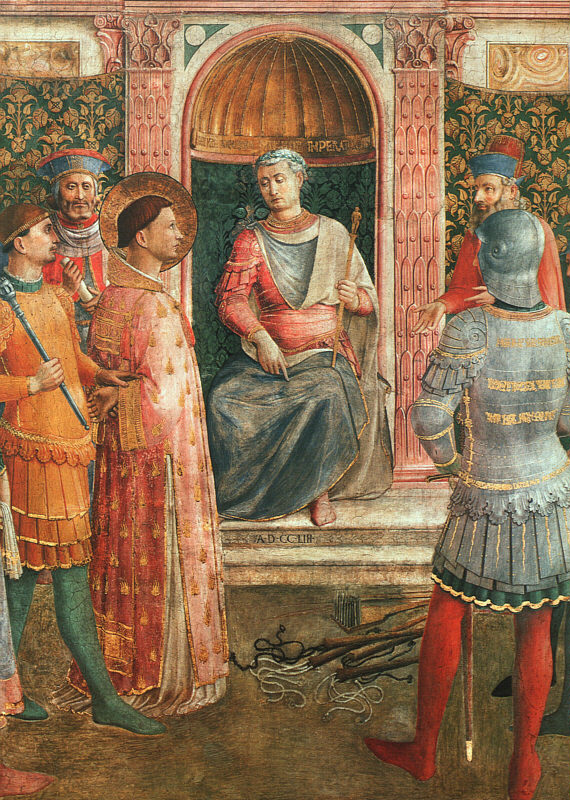
Their Story
Lawrence arrived in Rome as a young Spanish deacon, carrying a humble calling in an empire that feared Christians. Before his final trial, he was an ordinary man wrestling with extraordinary circumstances—tasked with distributing Church resources while persecution intensified around him.
As a servant to Rome's marginalized, Lawrence moved through the city's poorest quarters, his hands busy with bread and alms. He witnessed suffering daily, yet his faith deepened rather than wavered. When Rome's prefect demanded Lawrence surrender the Church's treasures, the deacon's answer revealed a transformed soul: he brought the poor, the sick, the widows—declaring *they* were Christianity's true wealth.
This act of spiritual defiance sealed his fate. Rather than breaking under Rome's fury, Lawrence discovered something paradoxical: in surrendering everything, he lost his fear. Legend tells of his final ordeal with a composure that bewildered his tormentors—a young man, barely thirty, who had already learned that no earthly power could touch what mattered most.
His martyrdom on August 10, 258 AD, became a declaration: love cannot be burned away. In his last moments, he transcended the instrument of his death, transforming it into a symbol of redemption rather than destruction. Lawrence had learned that holiness isn't perfection—it's choosing love when everything urges you toward despair.
Why People Pray to Lawrence of Rome
Believers seek Lawrence's intercession for courage in dark seasons, for the strength to prioritize faith over comfort. Those who serve the vulnerable call upon his example. His feast day invokes protection for those endangered by fire—literal and metaphorical. Lawrence teaches modern disciples that authentic spiritual power emerges not from immunity to suffering, but from choosing love within it.
Patron Saint Of
Lasting Impact
Lawrence transformed a deacon's simple role into a timeless witness for justice and compassion. Honored across Catholic, Orthodox, Anglican, and Lutheran traditions, he embodies radical generosity. His basilica outside Rome endures as pilgrimage destination. He remains patron of those serving others and those suffering—proving that a young man's faithfulness can echo across millennia.