Their Story
Giuseppe Desa arrived at the Conventual Franciscan monastery in 17th-century Italy with nothing but hunger and faith. He was rejected. His education was too poor, his mind too scattered, his aptitude for learning virtually non-existent. By all measures, he was unremarkable—"remarkably unclever," the records noted with blunt finality. But Giuseppe didn't retreat into bitterness. Instead, he persisted, pleading to be accepted as a lowly lay worker. When the friars finally relented, they gave him the humblest tasks: gardening, cleaning, simple labor.
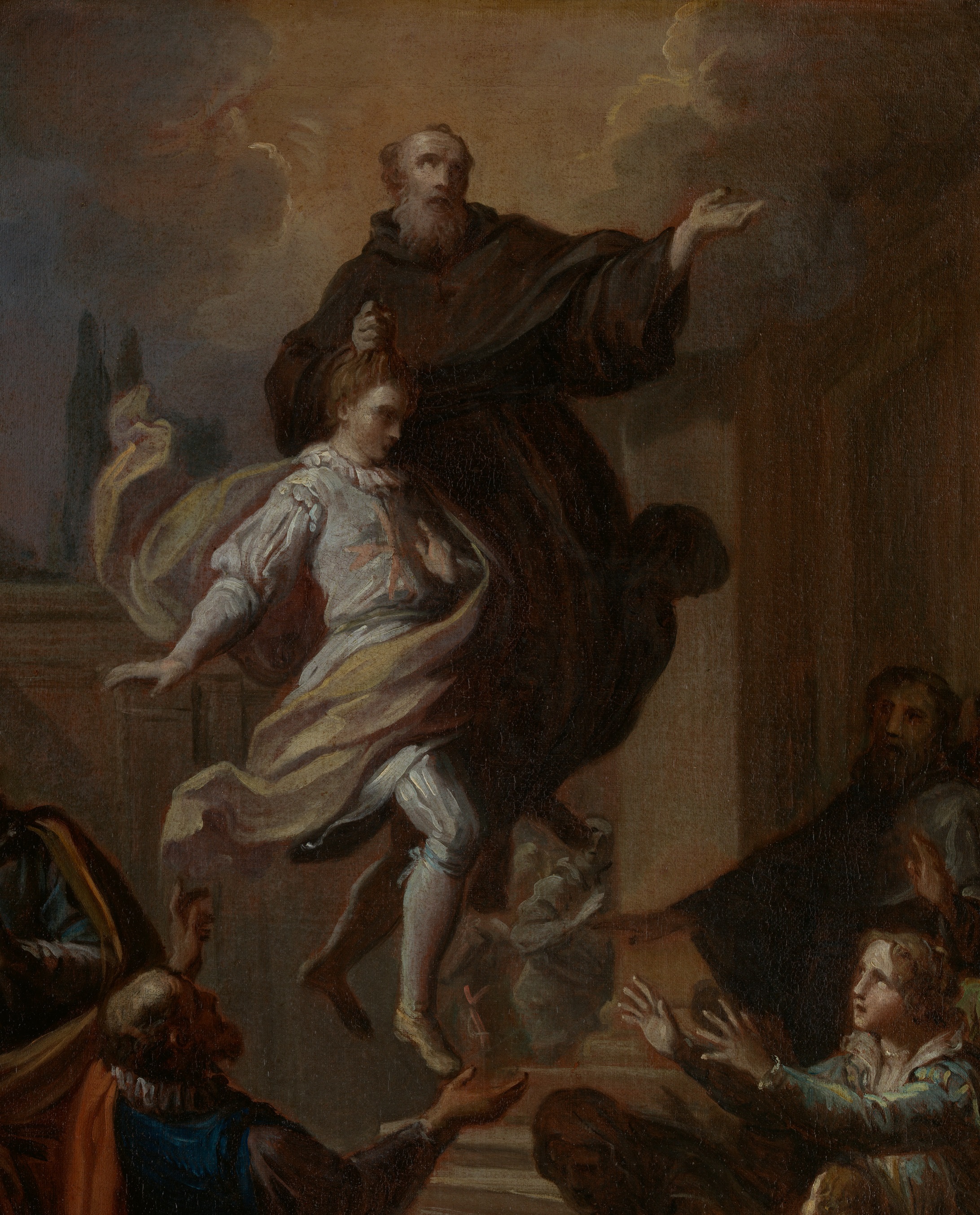
Yet something extraordinary was unfolding in the silence of his service. While others studied theology in heated debates, Giuseppe's prayer became his teacher. Witnesses reported that during Mass, his body would lift from the ground—sometimes several feet in the air—seized by such intense mystical visions that he became lost between earth and heaven. These weren't performances or fantasies. They terrified him. He became an object of curiosity and scorn, investigated by the Church itself, relocated repeatedly so people would stop following him.
Joseph's transformation wasn't about acquiring what the world values—credentials, recognition, intellectual prowess. It was about surrendering what he never had in the first place. His failure became his freedom. Freed from needing to prove himself, he discovered something deeper: direct communion with the divine. The boy who couldn't pass his exams became a saint whose inner experience transcended all human measuring. By the time he died in 1663, the Church recognized what had been true all along—that grace flows not through our strengths, but through our honest poverty of spirit.
Why People Pray to Joseph of Cupertino
Students and test-takers invoke Joseph when facing academic struggles and learning challenges. Pilots and air travelers pray for his protection during flights, drawing from the mysterious accounts of his levitation. But beyond these specific prayers, Joseph speaks to anyone who has felt rejected for their limitations or doubted their own worth. He shows us that failure isn't final—it's often the chrysalis of transformation. People pray to him when they need permission to stop trying to be what the world demands, and start becoming who God created them to be.
Patron Saint Of
Lasting Impact
Joseph of Cupertino remains the patron saint of students, pilots, astronauts, and those with learning disabilities—a living reminder that human categories of success mean little. He showed that the "failures" of this world often become God's instruments of greatest wonder. His 60 years of life reframed what it means to be gifted: not through achievement, but through availability to grace. His feast day, September 18th, continues to inspire seekers four centuries later.