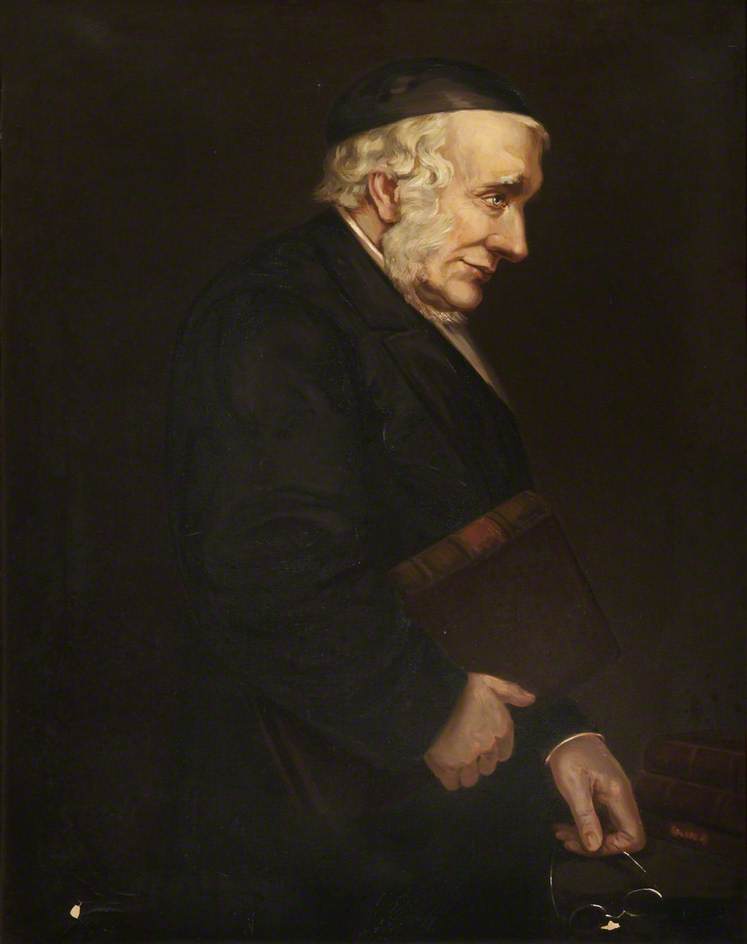
Their Story
Edward Bouverie Pusey arrived at Oxford as a privileged young man—born into aristocratic comfort, educated at elite institutions—yet something gnawed at him. The academic world demanded certainty; his soul demanded meaning. He excelled at Hebrew and theology, but intellectual achievement felt hollow. Like many brilliant minds, Pusey wrestled with the gap between what he could prove and what he could believe. He studied abroad, immersed himself in patristic theology, and gradually discovered that rigorous scholarship could deepen faith rather than destroy it.
This revelation became his life's work. For over fifty years as Regius Professor of Hebrew at Oxford, Pusey didn't hide his doubts—he walked through them publicly, showing students that wrestling with God was not weakness but devotion. He became a pillar of the Oxford Movement, helping resurrect sacramental theology and liturgical beauty in the Anglican Church when both seemed endangered. His struggle wasn't between faith and reason, but the harder battle: between comfort and calling. He chose calling. Through his scholarship, his writing, his mentorship of generations, and his unflinching commitment to deepening Christian practice, Pusey proved that a questioning mind could be a sanctified one.
Why People Pray to Edward Bouverie Pusey
People turn to Pusey today for help integrating faith with intellectual honesty. In an age of polarization between 'thinking' and 'believing,' he models a third way: rigorous scholarship in service of spiritual transformation. Scholars struggling with doubt, students questioning their inherited faith, and anyone caught between head and heart find in Pusey a companion who refused to choose between them—and discovered they belonged together.
Lasting Impact
Pusey's fifty-year tenure shaped Anglican theology for generations. He restored reverence for the Church Fathers, deepened understanding of sacramental grace, and mentored countless priests who carried his vision forward. His Pusey House at Oxford remains a center for theological study, embodying his conviction that scholarship and sanctity are inseparable pursuits.