Their Story
Methodius of Olympus lived in an age of theological chaos. A brilliant Greek scholar and bishop, he was plagued by the same questions that haunted early Christians: If the body decays, how can resurrection be real? If God is all-powerful, how do we truly choose? These weren't abstract puzzles to him—they were existential crises that threatened to unravel everything he believed.
He responded not by hiding his doubts but by diving deeper into them. Methodius wrote furiously—treatises on resurrection, on free will, on the renewal of all creation. His masterwork, the *Symposium*, used dialogue and passionate debate to wrestle with these impossible questions alongside ten virgin women, embodying the kind of radical intellectual honesty the early Church desperately needed. He wasn't answering from a pulpit of certainty; he was thinking out loud, inviting others into his struggle.
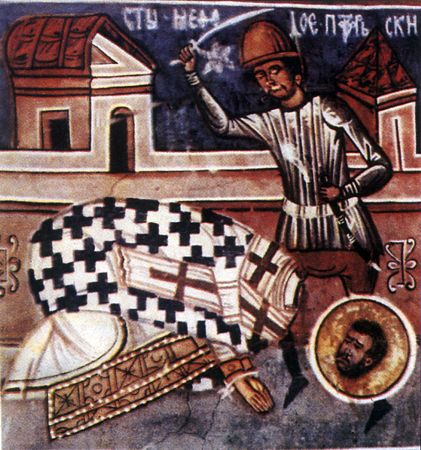
But intellectual courage eventually demanded physical courage. During the brutal persecutions under Diocletian around 311 AD, Methodius was arrested in Chalcis, Greece. Faced with torture and execution, the man who had spent his life defending resurrection now had to live it—had to choose faith not in theory but in his own flesh. He died a martyr, his body broken but his witness complete.
Why People Pray to Methodius of Olympus
People turn to Methodius when faith feels intellectually impossible—when doubt threatens to destroy belief rather than deepen it. Scholars, skeptics, and seekers find in him permission to question fiercely while remaining committed. He shows us that theology isn't escape from hard truths but engagement with them. In our age of information chaos and crisis of meaning, Methodius reminds us that wrestling with God is itself a form of devotion.
Lasting Impact
Methodius shaped early Christian theology by insisting that resurrection wasn't metaphor but cosmic reality—a renewal not rejection of the physical world. His willingness to grapple with the Church's toughest intellectual challenges, combined with his martyrdom, established him as a Church Father whose legacy bridges reason and faith, doubt and devotion.