Their Story
Gondulph's story begins in shadow. Born into 6th-century Frankish nobility, he was caught between two worlds—aristocratic privilege and spiritual calling. The historical record barely mentions him; scholars still debate whether he even existed as a distinct person or blended into legend. He married Palatina, a woman of influence, and fathered a son who would rise to duke. By all accounts, he should have remained a footnote in Merovingian genealogies, forgotten within generations.
But something shifted. Gondulph felt the weight of worldly status as a prison, not a prize. The churches were crumbling. The people needed a shepherd, not another ambitious nobleman. He renounced the comfortable path and accepted the burden of the episcopal see in Tongeren-Maastricht—a frontier region where faith was fragile and the work was relentless. This wasn't a dramatic conversion; it was quieter, more costly. He had to release his grip on legacy, on certainty, on the life his family had planned.
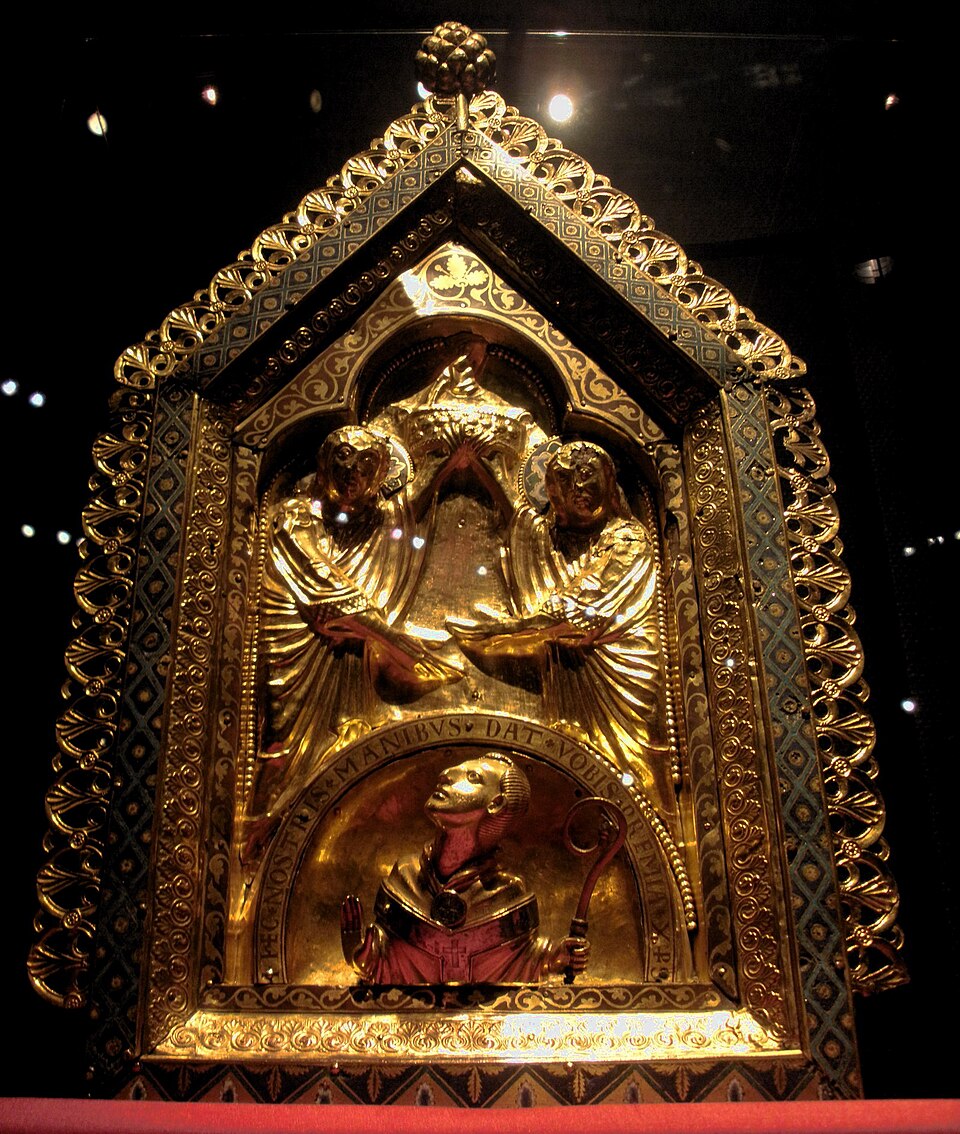
Working alongside his predecessor Monulph, Gondulph helped build the spiritual infrastructure of an entire region. He moved the episcopal seat to Maastricht, establishing a permanent home for faith in a turbulent age. His reliquary, now housed in Brussels, shows him gazing upward with the inscription: *"Through our hands Christ gives you these rewards."* It's a statement of surrender—hands open, eyes fixed on grace. Gondulph became a patron saint of Maastricht, venerated in both the Roman Catholic and Eastern Orthodox traditions. His obscurity in life became his strength in death: he belonged to no single narrative, but to everyone who struggled between the world and the sacred.
Why People Pray to Gondulphus of Tongeren
People turn to Gondulph when they face ambiguity about their calling or purpose. In our age of constant documentation and visibility, his historical obscurity is paradoxically liberating—he reminds us that impact doesn't require recognition. Those wrestling with leaving behind status, comfort, or family expectations for spiritual work find in him a companion. He's the saint for anyone who feels erased by history yet called to something greater, who worries their life might not matter because the record is unclear.
Lasting Impact
Gondulph's influence shaped the religious geography of the Low Countries. Though details of his life dissolved into legend, his institutional legacy endured: the bishopric he helped establish became foundational to the region's Christian identity. He stands as patron of Maastricht alongside Servatius and Monulph, a holy trinity that stabilized faith during the chaotic early medieval period. His quiet persistence demonstrates that holiness often leaves faint historical traces but eternal spiritual marks.