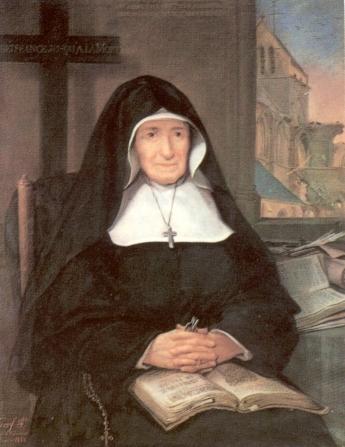
Their Story
Julie Françoise-Catherine Postel was born into 18th-century Normandy as an ordinary girl with an extraordinary calling—but she didn't know it yet. When the French Revolution erupted, her world fractured. Churches closed. Priests vanished. Teachers were forced to abandon their posts or bend the knee to the new regime. Marie-Madeleine faced an impossible choice: stay safe or become a criminal in the eyes of the state.
She chose the harder path. Her shuttered schoolhouse became a clandestine sanctuary for fugitive priests—an act of resistance that could have cost her life. For years, she lived with the constant terror of discovery, knowing that harboring clergy meant the guillotine. Yet she refused to abandon her faith or her calling, even when fear whispered loudest.
But Marie-Madeleine's greatest act came after the chaos subsided. Rather than retreat into quiet retirement, she poured her battered heart into something audacious: founding the Sisters of Christian Schools of Mercy. At an age when most people seek rest, she built a movement dedicated to educating around 300 children—the poorest of the poor. She didn't wait for permission or perfect conditions. She created community from rubble, transformed her grief into purpose, and proved that one woman's conviction could reshape generations. Her 90 years weren't lived in comfort; they were lived in radical, stubborn love.
Why People Pray to Marie-Madeleine Postel
Today, people turn to Marie-Madeleine when they face injustice they feel powerless to stop—when systems seem rigged and speaking up feels dangerous. She speaks to teachers and educators who work underfunded and undervalued, reminding them their work matters eternally. She comforts those harboring secret doubts during times of cultural upheaval, whispering that quiet resistance and faithfulness, sustained over decades, reshape the world far more than we ever see.
Lasting Impact
Marie-Madeleine's Sisters of Christian Schools endured long after her death, becoming a living testament to her vision. She canonized in 1925, she remains patron of Catholic educators and a symbol of unshakeable conviction. Her life proves that holiness isn't reserved for the dramatic moment—it lives in the daily choice to love when loving costs everything.