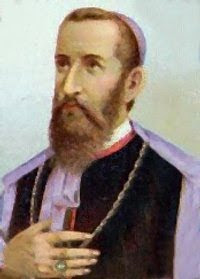
Their Story
Giustino de Jacobis was born into the Kingdom of Naples in 1800, a world of certainty and comfort. Yet something restless burned inside him. At just eighteen, he abandoned that safe life, entering the Congregation of the Mission in Naples—a decision his family likely questioned. For decades, he served in relative obscurity, wrestling with the weight of his vocation in a priesthood that demanded everything: poverty, obedience, the surrender of personal ambition.
But at thirty-nine, Giustino faced his true test. In 1839, he was sent to Abyssinia—a remote, hostile territory where Ethiopia's mountains isolated believers and politics made his mission nearly impossible. He arrived knowing almost nothing of the culture, the language, the terrain. Most missionaries would have broken. Instead, Giustino stayed. For over twenty years, he walked between warring kingdoms, negotiated with emperors, and built the first Catholic foothold in a land that had rejected Rome for centuries. In 1847, the Church officially named him Apostolic Vicar—the spiritual leader of an entire region he'd helped transform.
Yet success brought new suffering. Political turmoil, illness, and the exhaustion of pioneering work wore on him. On July 31, 1860, in the remote port town of Zula, this man who'd given everything finally rested. He died at fifty-nine, having traded comfort for purpose, safety for service. His legacy? A living Catholic presence in Ethiopia that endured long after his death—proof that one person's faithfulness can reshape generations.
Why People Pray to Giustino de Jacobis
Missionaries and adventurers turn to Giustino de Jacobis when they face the impossible—when called to unfamiliar lands, hostile cultures, or work that seems to yield no visible fruit. He teaches us that faithfulness matters more than results. Those struggling with isolation, doubt about their vocation, or the weight of pioneering work find in him a saint who understood that transformation happens slowly, often unseen. He intercedes for anyone brave enough to leave comfort behind.
Patron Saint Of
Lasting Impact
Giustino de Jacobis established the Catholic Church in Ethiopia, creating a living bridge between Rome and a land that had stood apart for centuries. He demonstrated that missionary work requires not conquest but deep listening, cultural respect, and decades of patient presence. The Ethiopian Catholic Church he helped birth endures today—a testament to one man's refusal to abandon a distant flock.