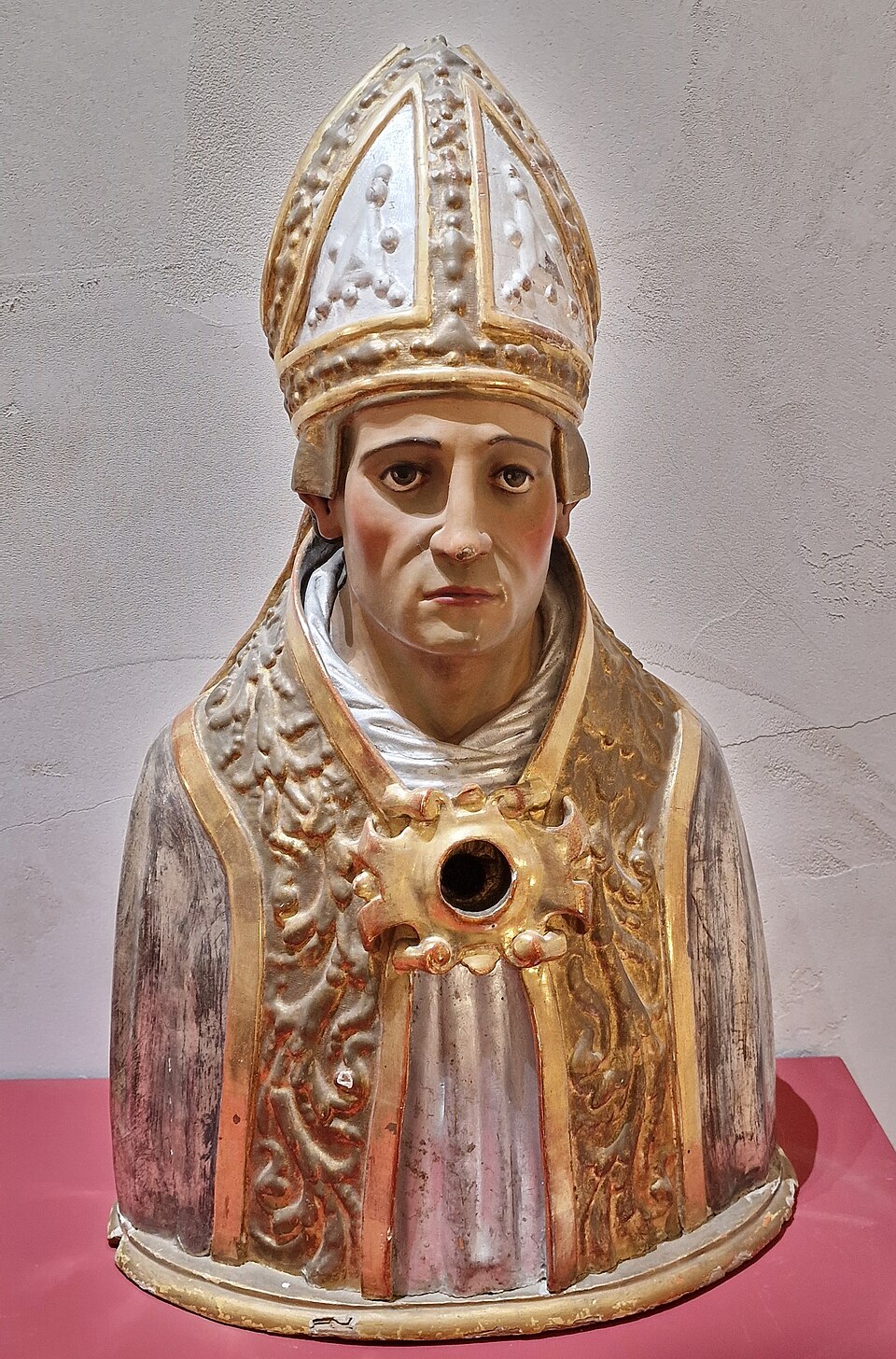
Their Story
Gaudiosus was born into everything the world promised would satisfy: his father, Guntha, was a high-ranking military official at the court of King Theodoric the Great, wielding power and influence in the Visigothic kingdom. Young Gaudiosus had access, prestige, a clear path to secular authority. But something inside him resisted.
Instead of following his father's trajectory into politics and warfare, his education was entrusted to Victorian of Asan, an abbot near Burgos. This wasn't a punishment—it was a choice, one that meant turning away from comfort and status. In the monastery, Gaudiosus faced the real struggle: learning to be nothing so he could serve everyone. The quiet discipline, the stripped-down spirituality, the surrender of ambition—these were harder battles than any his father had fought.
Around 530, at middle age, Gaudiosus was appointed Bishop of Tarazona. He didn't seek recognition. The historical record barely remembers his specific deeds—what survives is only a parchment sketch discovered 1,033 years after his death. Yet this obscurity reveals his true victory. He didn't need monuments or documented achievements. Gaudiosus had already conquered what matters most: the choice to lead through presence rather than power, to serve a small Spanish diocese faithfully rather than dominate a kingdom. When he died around 540, the people venerated him immediately—not for what he built, but for who he became.
Why People Pray to Gaudiosus of Tarazona
In a culture obsessed with status and inheritance, Gaudiosus reminds us that our birth circumstances don't define our destiny. People pray to him when wrestling with family expectations, when tempted by power they didn't earn, or when choosing the harder path toward authenticity. He intercedes for those caught between two worlds—the life society planned and the life their soul demands. In our age of performative achievement, his quiet legacy speaks: true greatness whispers.
Lasting Impact
Gaudiosus remains the patron of Tarazona and a symbol of faithful obscurity. His remains, translated to the cathedral in 1573, continue to inspire pilgrims who understand that holiness isn't always visible. He teaches that a life well-lived needs no viral moments—only integrity, hidden service, and the courage to disappoint those who wanted something else from you.