Their Story
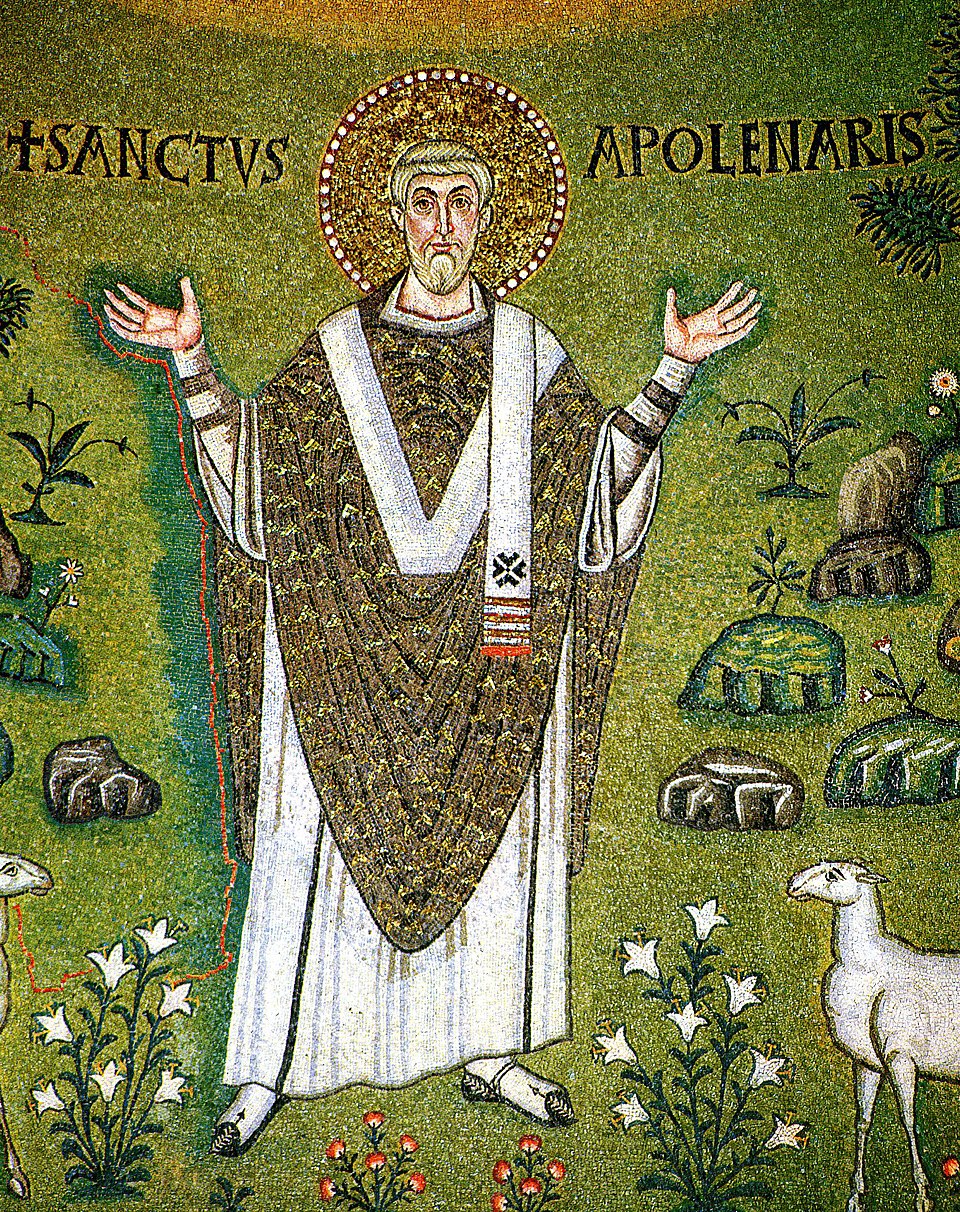
Apollinaris arrived in Ravenna as a foreigner with a fragile mission. Sent by Saint Peter himself during the reign of Emperor Claudius, he carried an enormous burden: to plant the seeds of faith in a pagan port city that had little use for his message. The early years were likely marked by doubt and isolation. How could one Syrian priest convince an entire region steeped in Roman gods and local traditions? He faced skepticism, resistance, and the constant pressure of working alone in unfamiliar territory.
Yet something shifted within him. Rather than retreat into despair, Apollinaris became a devoted shepherd—moving through Ravenna not with arrogance, but with genuine compassion. He listened to people's fears, healed their spiritual wounds, and built a community of believers despite overwhelming odds. He became the first Bishop of Ravenna, establishing the Church of Classis near the city, turning a struggling outpost into a thriving spiritual center.
His transformation wasn't gentle. According to tradition, his unwavering commitment eventually led to his martyrdom—a sword becoming the instrument of his final witness. But Apollinaris never wavered. He had moved from uncertain missionary to fearless leader, proving that faith isn't about certainty; it's about showing up, even when the odds are impossible.
Why People Pray to Apollinaris of Ravenna
Apollinaris speaks to anyone who feels like an outsider trying to find their place. People pray to him when facing resistance to their calling, when they struggle to build community in hostile environments, or when they need courage to persist through misunderstanding. He's a patron for those with epilepsy and gout—physical afflictions that remind us that holiness doesn't exempt us from suffering. In modern times, he inspires those working in difficult regions, building new institutions, or standing alone for their convictions.
Patron Saint Of
Lasting Impact
Apollinaris transformed Ravenna from a spiritually barren outpost into a thriving center of faith. His basilica, Sant'Apollinare in Classe, stands as one of Italy's most magnificent Byzantine monuments—a testament to his enduring influence. Venerated across Europe and honored by both Eastern Orthodox and Roman Catholic churches, he remains a symbol of faithful perseverance against the odds.