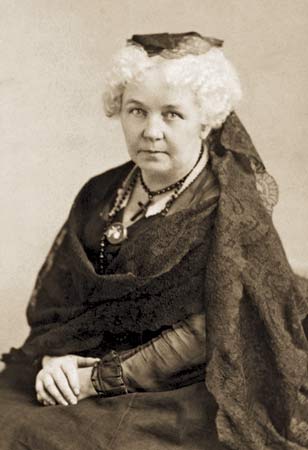
Their Story
Elizabeth Cady Stanton arrived in a world designed to diminish her. Born into privilege but denied access to the same education as her brothers, she felt the sting of injustice early—a wound that never fully healed, but instead festered into purpose. She watched her father, a judge, turn away women seeking legal protection. She witnessed slavery's brutality alongside her abolitionist family. The contradiction tormented her: How could America claim freedom while half its population lived as property?
Marriage and motherhood—seven children in rapid succession—threatened to swallow her whole. She struggled with exhaustion, with the erasure of self that domesticity demanded. Yet instead of accepting her cage, she raged against it. In 1848, at Seneca Falls, she did the unthinkable: she demanded women's right to vote. Even allies called her extreme. Doubt crept in. Was she destroying her family's reputation? Was she too angry, too loud, too much?
But Stanton refused to shrink. She met Susan B. Anthony in 1851, and together they became an unstoppable force—writing, speaking, organizing across decades. Her vulnerability became her power. She wrote not from detachment, but from lived pain: the pain of watching her daughter denied education, of having her own words edited by men, of aging while fighting battles she knew she might never see won. She lived to see the seed planted, though not the harvest. Her legacy whispers to us: holiness sometimes looks like beautiful, justified rage.
Why People Pray to Elizabeth Cady Stanton
People turn to Elizabeth Cady Stanton when they feel voiceless or powerless against systems that seem immovable. She teaches us that anger at injustice is sacred, not sinful. In a world still struggling with inequality and women's dignity, she intercedes for those fighting for rights that seem obvious but remain elusive. She reminds us that transformation requires naming the problem clearly—and refusing to apologize for it.
Lasting Impact
Stanton's Declaration of Sentiments became the manifesto for women's rights globally. Though she died before women won the vote, her words and vision shaped the movement's trajectory for generations. She proved that a woman's voice—passionate, intellectual, uncompromising—could alter the course of history. Her legacy lives in every woman who refuses to be silent.