Their Story
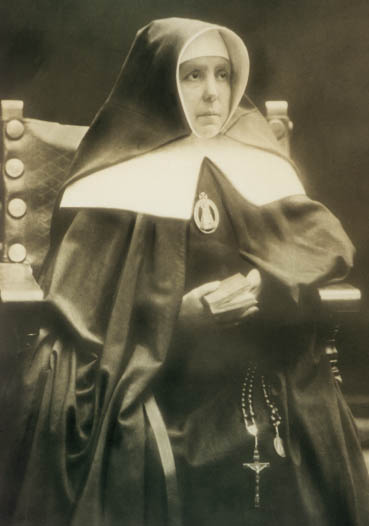
Ana Petra's story begins not in holiness, but in isolation. Orphaned by her mother at three years old, she was raised by her grandmother—a woman of faith, but still a woman displaced in her own family. Her father twice rejected marriage proposals for her, and when she finally found her voice to say "I have no vocation for marriage," she wasn't celebrated. Instead, her parents turned cold. She had disappointed them. She was a last child, a burden, a daughter who refused the only future they understood.
But here is where Ana Petra's transformation begins: in that rejection, she discovered something her family could not give her—a purpose larger than their disappointment. She recognized that if she had been cast aside by blood, there were countless others cast aside by society itself. The abandoned children. The elderly poor. The forgotten sick. She didn't become holy to escape her pain; she became holy by walking directly into everyone else's. In 1880, at thirty-five years old, she founded the Congregation of the Mothers of the Forsaken and St. Joseph of the Mountain. The name itself is a confession: she knew what it felt like to be forsaken. She knew what it felt like to need a father—and she named her order after Saint Joseph, the earthly father who accepts what the world rejects. For twenty-six years, until her death in Barcelona in 1906, she gathered the unwanted and made them wanted. She transformed her family's rejection into a mother's embrace for hundreds.
Why People Pray to Ana Petra Pérez Florido
People turn to Blessed Ana Petra when they face rejection, abandonment, or feel cast aside by those they love most. She understands the particular pain of being told you don't fit the mold, that your choices disappoint your family, that you're somehow not enough. But her life whispers a radical truth: your rejection might be the doorway to your truest calling. She intercedes especially for mothers caring for foster and abandoned children, and for anyone rebuilding identity after family fracture.
Lasting Impact
Ana Petra's Congregation of the Mothers of the Forsaken still operates today, continuing her mission across Spain. She transformed the spiritual meaning of "forsaken"—no longer a state of shame, but of sacred visibility. Her beatification by Pope John Paul II in 1994 canonized not just her holiness, but her fierce insistence that the rejected, the abandoned, and the forgotten are bearers of infinite dignity.