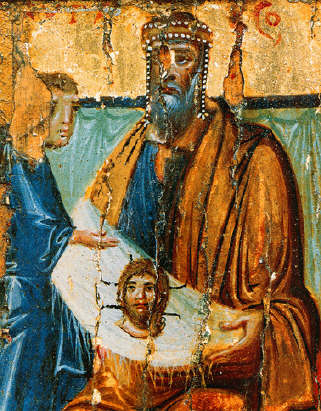
Their Story
King Abgar of Edessa faced what every ruler fears: powerlessness. Struck by illness he could not command away, surrounded by physicians who offered no cure, he reached a breaking point. In desperation—not faith, but raw human need—he wrote to Jesus, a distant figure he'd only heard of. The request was audacious, almost presumptuous. Why would the Messiah come to a foreign king? Yet Abgar sent it anyway, because sometimes vulnerability is the only weapon left.
Jesus declined the visit, but promised something else: healing through his disciples. When Thaddeus arrived in Edessa bearing Christ's word, something extraordinary happened. The king was healed. But the transformation went deeper than physical cure—it became spiritual. What emerged from that encounter was the Acheiropoietos, the "image not made by hand." A miraculous imprint of Christ's face appeared on cloth, a divine signature that needed no artist's brush. This wasn't a portrait created by human skill; it was God's own response to a man's desperate cry.
For centuries, this image protected Edessa. During the Persian siege of 544, the cloth was displayed on the city walls, and the attackers mysteriously withdrew. The icon became proof that prayer pierces heaven, that vulnerability invites divine response, and that transformation comes not from strength but from honest admission of need.
Why People Pray to Acheiropoietos icon
People turn to the Acheiropoietos icon when they face their own King Abgar moments—illness, hopelessness, the feeling that human solutions have failed. In our age of self-sufficiency and hidden struggles, this icon reminds us that asking for help, even divine help, is an act of courage. It teaches that vulnerability isn't weakness; it's the gateway through which miracles enter. Those seeking healing, whether physical or spiritual, find in this image a witness that desperate prayers are heard.
Lasting Impact
The Acheiropoietos icon became Christianity's first image not made by human hands, establishing the profound truth that divinity can imprint itself on our world. It sparked centuries of theological reflection on the nature of images and faith, ultimately shaping how Christians understand the sacred. Its miraculous appearance transformed doubt into devotion, inspiring countless pilgrims and becoming the foundation of iconographic tradition itself.