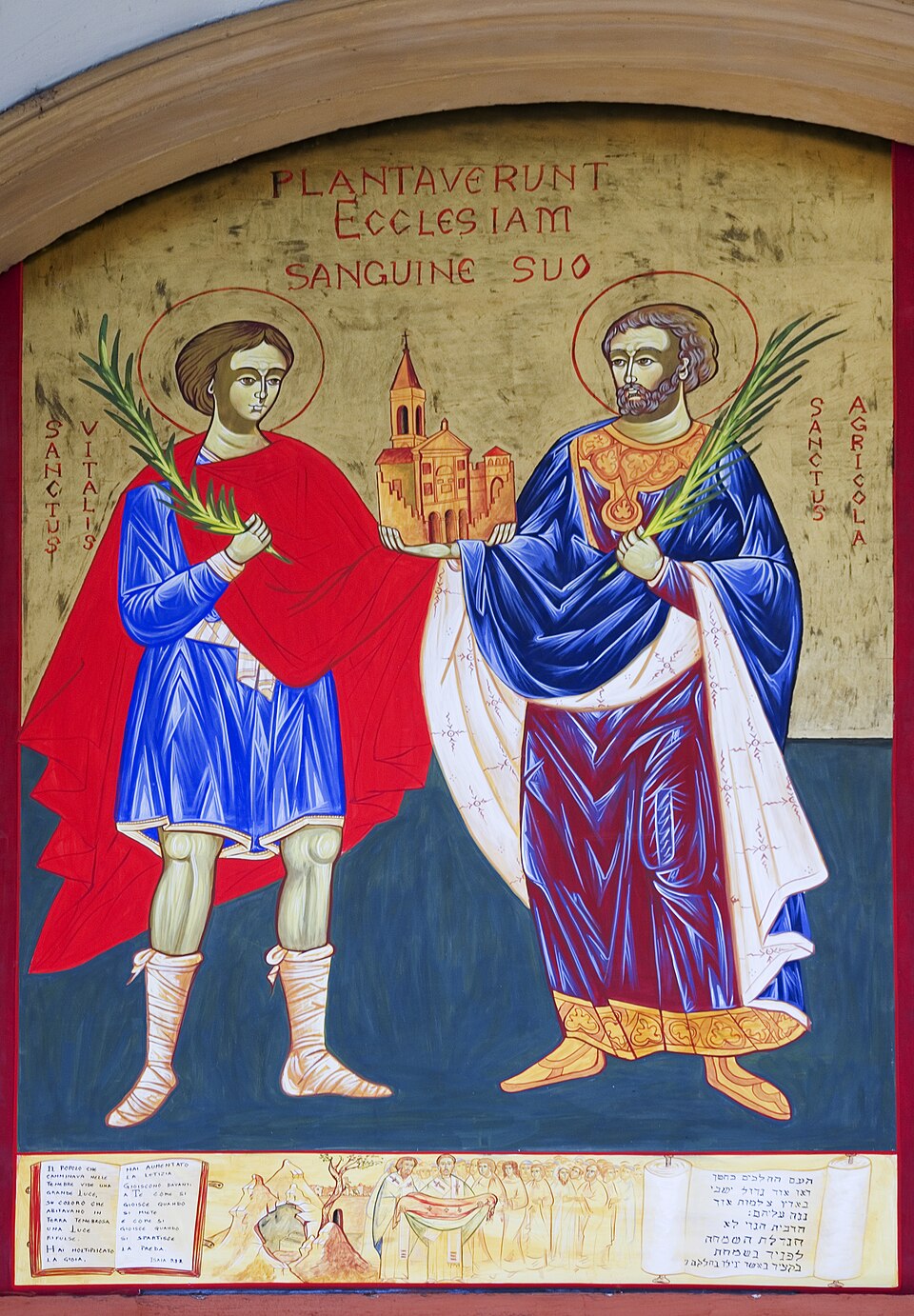
Their Story
Agricola was a respected gentleman of Bologna—comfortable, admired by the pagan elite around him. But something gnawed at his soul. When he encountered Christianity, he didn't keep it to himself. He shared his newfound faith with Vitalis, his slave, crossing a boundary that society said should never be crossed. In Roman eyes, a slave and a master were worlds apart. But Agricola saw something different: a brother. Vitalis transformed too, finding dignity and purpose in a faith that told him he was equal before God.
When Diocletian's persecution reached Bologna around 304 AD, both men faced an impossible choice. The authorities seized them separately, hoping to break their resolve through fear and pain. Vitalis was thrown into the amphitheater first—tortured mercilessly, his body reduced to wounds. Yet accounts say he never stopped praising God, never begged for mercy. He faced death with a peace that terrified his executioners.
When Agricola learned his beloved friend and convert was gone, he didn't collapse. Instead, he was strengthened. The judges expected grief to weaken him; instead, they found defiance. They tortured him next, but torture meant nothing to a man who had already surrendered everything to love. Agricola was crucified—nailed so thoroughly that his wounds outnumbered his limbs. Both died in 304, buried in obscurity in a Jewish cemetery. But their story didn't end there. Nearly 90 years later, when their remains were discovered and their relics spread across Europe by Saint Ambrose, their witness ignited the hearts of thousands.
Why People Pray to Vitalis and Agricola
People pray to Vitalis and Agricola when facing persecution for their beliefs, when caught between loyalty to faith and loyalty to authority, and when seeking courage to defend the vulnerable. Their story speaks especially to those who've crossed social boundaries to stand with the marginalized, and to anyone whose faith has cost them dearly. They remind us that love and conviction can transform any relationship—and that true nobility lies not in status, but in surrender.
Lasting Impact
Vitalis and Agricola became Bologna's protomartyrs, their veneration spreading across Europe through Saint Ambrose's efforts. Their relics reached Milan and Florence, becoming touchstones for early Christian courage. They remain symbols of faith transcending hierarchy—proof that the gospel's radical equality was worth dying for, and that the powerful and powerless united in Christ become unstoppable.