Their Story
In the turbulent early centuries of the Church, Victoria, Anatolia, and Audax lived as ordinary faithful in Rome's shadow—vulnerable, uncertain, caught between two worlds. They were not born saints. They were people who loved their faith but faced the paralyzing terror of persecution. During the reign of Roman emperors hostile to Christianity, these three wrestled with the most human of doubts: Would their faith be enough? Could they truly surrender everything?
Victoria in Trebula Mutuesca and Anatolia with young Audax in Tora knew the weight of impossible choices. The authorities demanded they renounce their God or face death. In those final moments, something shifted within them. Their fear didn't vanish—instead, it transformed into clarity. They recognized that their temporary earthly suffering was nothing compared to the eternal communion they sought. Their martyrdom around 250 AD became not an ending, but a declaration: that faith transcends fear, that love outlasts violence.
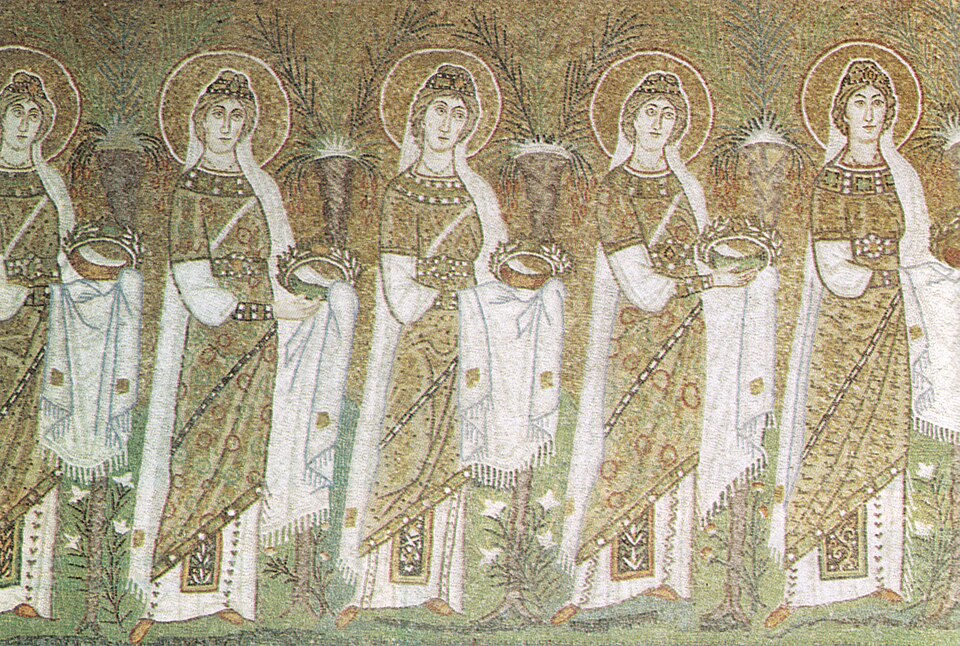
What makes their witness so powerful is its ordinariness. They weren't philosophers or warriors by training. They were believers who chose fidelity over survival. Their names were preserved in ancient martyrologies and immortalized in the magnificent mosaics of Ravenna, where they stand eternally in the Procession of Virgins—a visual testimony that their sacrifice echoed across centuries, transforming the very Church they died protecting.
Why People Pray to Victoria, Anatolia, and Audax
People turn to Victoria, Anatolia, and Audax when facing impossible choices between faith and pressure, between conscience and conformity. In our modern age of subtle persecution—social pressure, professional sacrifice, standing alone—these saints offer proof that integrity survives. They inspire those struggling with doubt, fear, or the cost of conviction. Their feast day (July 10) calls us to remember that choosing truth always matters, always transforms us, always echoes forward.
Lasting Impact
Victoria, Anatolia, and Audax became eternal symbols of Christian martyrdom and courage. Their veneration spread across both Catholic and Orthodox traditions, with churches and villages bearing their names from Italy to Poland. Their presence in early Christian art—particularly Ravenna's stunning mosaics—ensured their witness would be visual and visceral for all generations. They remind us that ordinary faithfulness creates extraordinary grace.