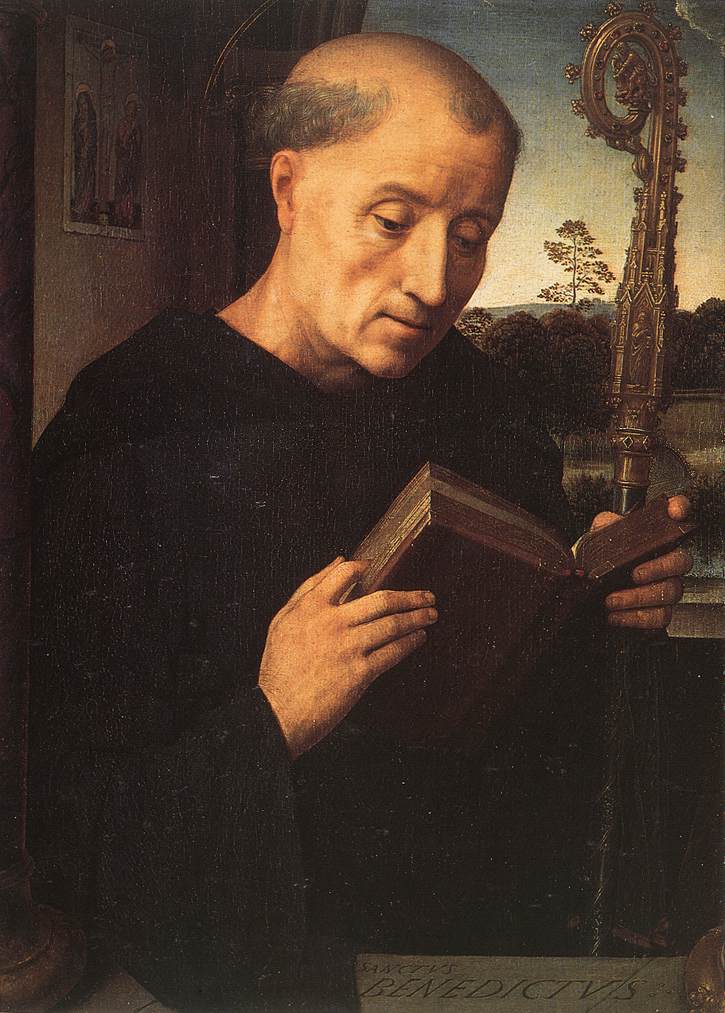
Their Story
Young Benedict of Nursia watched Roman society crumble around him—violence, corruption, moral decay everywhere. Disgusted and disillusioned, he did what many dream of: he ran away. Around 500 AD, this educated Italian abandoned everything and hid in a cave near Subiaco, determined to find God through radical solitude. For three years, he wrestled with his own demons—loneliness, doubt, the gnawing fear that his escape was cowardice, not calling.
But something unexpected happened. People found him. Desperate seekers, broken monks, the spiritually lost—they came to his cave asking for wisdom. Benedict resisted at first, but gradually realized his insight could heal others. He began establishing small monastic communities, teaching that salvation wasn't found in heroic isolation, but in shared discipline, honest work, and mutual accountability. His Rule—a written guide for monastic life—was radically humane: it insisted on moderation, rest, practical labor, and communal meals. 'Ora et labora' (pray and work) became his mantra, rejecting both extreme asceticism and worldly indulgence.
What started as one hermit's escape became the spiritual architecture that would stabilize Europe for centuries. Benedict died at Monte Cassino in 547, having transformed not through perfection, but through the humble act of showing others that transformation itself was possible. His monasteries became centers of learning, agriculture, hospitality, and healing during the Dark Ages—sanctuaries of order when chaos threatened to consume everything.
Why People Pray to Benedict of Nursia
People turn to Benedict when they're exhausted by extremes—whether overwork or escapism, perfectionism or despair. Farmers pray for his protection of their fields and livelihoods. Those struggling with addiction and poison find hope in his symbol of the broken cup. Modern seekers invoke him when building communities, establishing routines, or searching for balance between contemplation and action. He speaks to anyone asking: 'How do I create meaning through simple, daily work?'
Patron Saint Of
Lasting Impact
Benedict transformed monasticism from solitary heroics into sustainable community life. His Rule became the foundation of Western religious practice and organizational thinking—emphasizing hospitality, humility, and the sacred value of human labor. Declared Patron of Europe by Pope Paul VI, Benedict's influence extends far beyond the monastery: his principles shaped education, agriculture, and the very concept of civilized order during humanity's darkest hour.