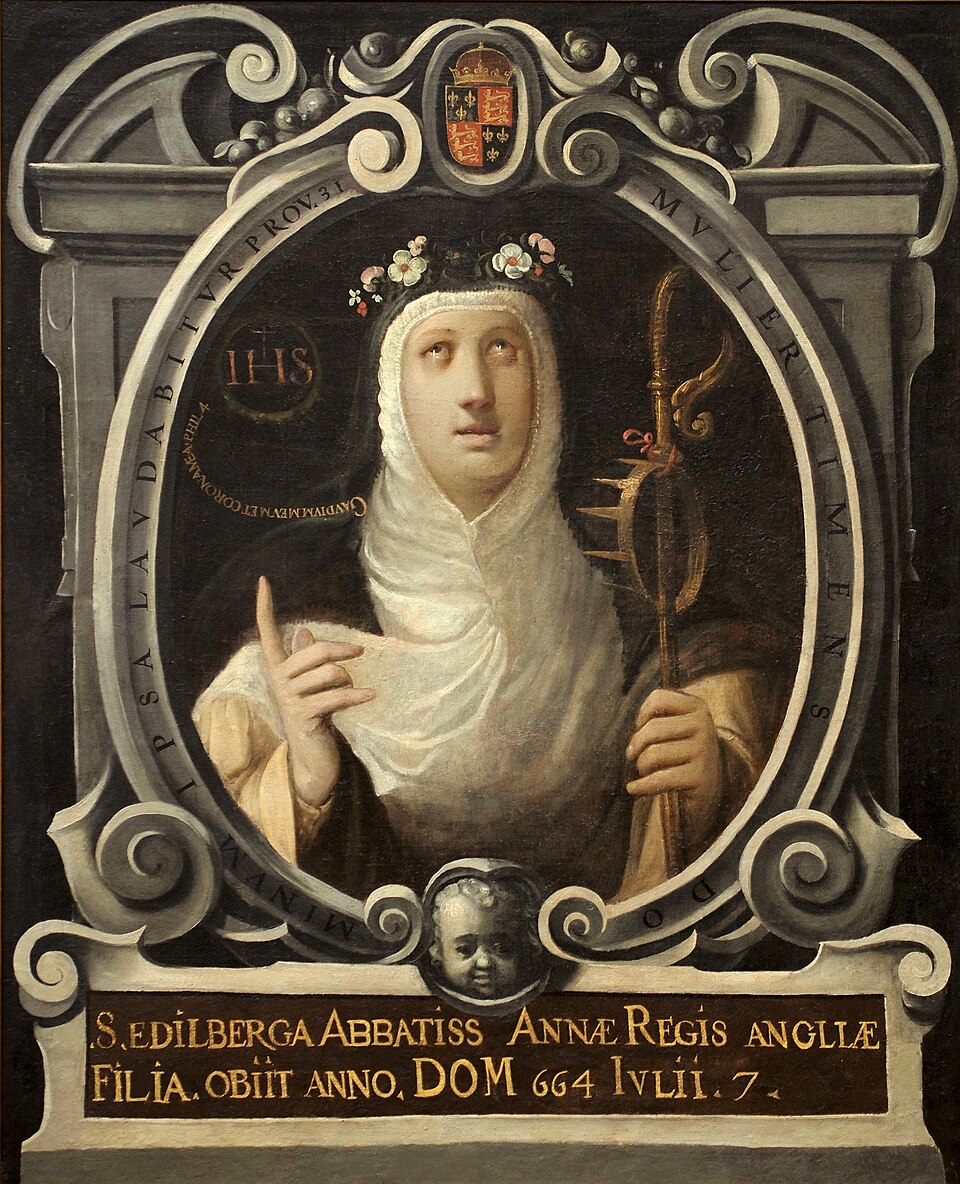
Their Story
Born into the East Anglian royal house, Æthelburh carried a wound that shaped everything: she was probably illegitimate. While her sisters—Æthelthryth, Seaxburh, Withburga—claimed their place in the kingdom's religious elite, Æthelburh faced whispers of illegitimacy, the quiet rejection reserved for those born on the margins. She was a princess with no guaranteed inheritance, no secured status. The uncertainty must have haunted her.
But her father, King Anna, made a choice that saved her: he sent her to Faremoutiers Abbey in France for education alongside her sister Saethryth. What could have been exile became sanctuary. In that monastery across the Channel, Æthelburh discovered something the court could never give her—a calling that wasn't contingent on bloodlines or legitimacy. She became abbess, leading a community of women with quiet authority that no earthly father could revoke. Here, she was not marginal. She was essential.
When Saethryth began construction of a church honoring the twelve apostles, Æthelburh stood beside her, building something meant to last. When Saethryth died in 664, her body was moved seven years later—and it was found incorrupt, unchanged by decay. In that moment, the illegitimate princess became undeniable proof: the forgotten are never abandoned by grace. Her body, preserved by divine hands, testified to what the world had missed—that she had always mattered.
Why People Pray to Æthelburh of Faremoutiers
People turn to Æthelburh when they feel unseen by the world—when their origins, circumstances, or status seem to disqualify them from belonging. She understands the pain of not quite fitting, of being pushed to the margins. In her story, those on the outside discover that exile can become calling, that what the world deems insignificant, God sanctifies. She speaks to the rejected, the illegitimate, and the forgotten—showing them that their obscurity is not their destiny.
Lasting Impact
Æthelburh's incorrupt body became a relic that spoke louder than any words could: the powerless are not powerless to God. Her abbey became a center of spiritual authority in medieval Europe, proving that women born into uncertainty could lead with unshakeable conviction. She remains a silent witness that wholeness doesn't require the world's approval—only grace.