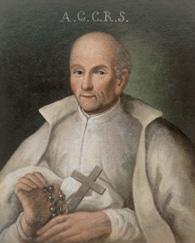
Their Story
Jan Papczyński entered priesthood in 17th-century Poland with a burning question: what does God really want from me? Born in 1631 in Podegrodzie, he felt the weight of ordinary expectations—serve, obey, survive. But something deeper called him. He didn't just want to be a priest. He wanted to rebuild the Church from the inside out.
Yet transformation rarely comes cleanly. For years, Stanislaus wrestled with the tension between his visions and institutional resistance. The religious landscape of Poland was fragmented, wounded by war and spiritual apathy. He saw unborn children forgotten, the learning-disabled cast aside, and he felt the sting of a broken system. Most men would have surrendered to cynicism. Instead, he chose to act.
In 1670, at nearly forty years old, Stanislaus founded the Marian Fathers of the Immaculate Conception—Poland's first indigenous religious order. Not through force or charisma, but through relentless prayer, prolific writing, and radical compassion. He dedicated himself to defending the vulnerable, particularly children struggling to learn and unborn life. For thirty years, he poured his life into building something that would outlast him. He died on September 17, 1701, at seventy, having planted seeds that would grow for centuries. Beatified in 2007, canonized by Pope Francis in 2016, Saint Stanislaus reminds us that faithfulness—not perfection—is what transforms the world.
Why People Pray to Stanislaus Papczyński
Saint Stanislaus speaks to modern parents and educators struggling to protect children with learning difficulties and developmental challenges. In our fractured age, people pray to him for the courage to defend the vulnerable when systems fail them. He's also invoked by those feeling called to spiritual renewal—those who sense God asking more of them than comfort allows. His intercession brings clarity to the restless, strength to the discouraged.
Lasting Impact
Stanislaus left an enduring institutional legacy through the Marian Fathers, whose mission continues protecting children and advancing spiritual renewal worldwide. More profoundly, he modeled a spirituality rooted in concrete action: mercy becomes real only when we defend those society forgets. His feast day (September 17) reminds us that holiness means showing up, again and again, for those no one else will.