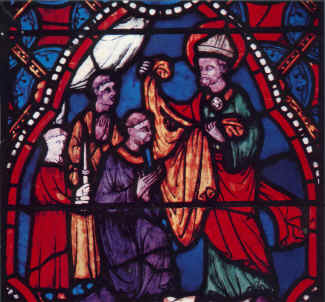
Their Story
Sidonius Apollinaris had it all. Born into Gallo-Roman nobility around 430 AD, he was the golden child of a collapsing empire. His poetry earned him statues in Trajan's Forum. His diplomacy made him Urban Prefect of Rome. Emperors courted him. Senators envied him. He was celebrated, honored, powerful—and spiritually hollow.
But comfort breeds complacency. As the Western Roman Empire crumbled, Sidonius watched his glittering world shake. In 469, at the height of his influence, something shifted. He answered a deeper calling and became Bishop of Clermont. It seemed like a retreat from power. It wasn't.
When the Visigothic king Euric's armies surrounded Clermont from 473 to 475, Sidonius faced the test that transforms a man. He didn't flee to safety. Instead, he led his terrified city through siege and conquest, using prayer as his weapon when steel failed. His letters from this period reveal raw fear—but also unshakeable faith. He lost the city but kept his integrity. He lost his worldly status but gained something fiercer: spiritual authority that no conqueror could take. Until his death in the 480s, he remained Clermont's shepherd, proof that true power isn't about what you keep, but what you're willing to lose.
Why People Pray to Sidonius Apollinaris
In an age of collapsing certainties, Sidonius speaks to those who've tasted success only to find it empty. People pray to him when facing impossible choices—when comfort demands compromise. He guides those who must lead through crisis without weapons, inspiration without guarantee. For anyone watching their world shake and wondering if faith still matters, Sidonius whispers: it's the only thing that ever did.
Lasting Impact
Sidonius remains the single most important surviving voice from 5th-century Gaul. His letters and poetry illuminate a world in transition between Roman and medieval Europe. He modeled a radical integration: intellectual depth with spiritual conviction, worldly engagement with transcendent purpose. His witness endures as proof that holiness isn't escape—it's transformation.