Their Story
Serapion was born into violence. As a boy accompanying his father during the Crusades, he witnessed the brutality of holy war firsthand—the bloodshed at Acre in 1191, the relentless Reconquista campaigns across Spain. He became what his era demanded: a skilled warrior serving kings and generals, a man trained to kill for causes labeled sacred. But somewhere in those years of conquest and combat, Serapion began to see the cost—not just the bodies fallen, but the hollowing of his own soul.
The turning point came when he met Peter Nolasco in Barcelona. In Nolasco's vision of the Mercedarian Order—a community dedicated to ransoming Christian captives and enslaved peoples—Serapion found what violence could never give him: redemption through mercy. He renounced his sword and took vows, becoming a priest. But this wasn't a comfortable retirement into monastery walls. Instead, Serapion traveled to Algiers, then a dangerous center of slavery and suffering, to walk directly into the pain he once inflicted.
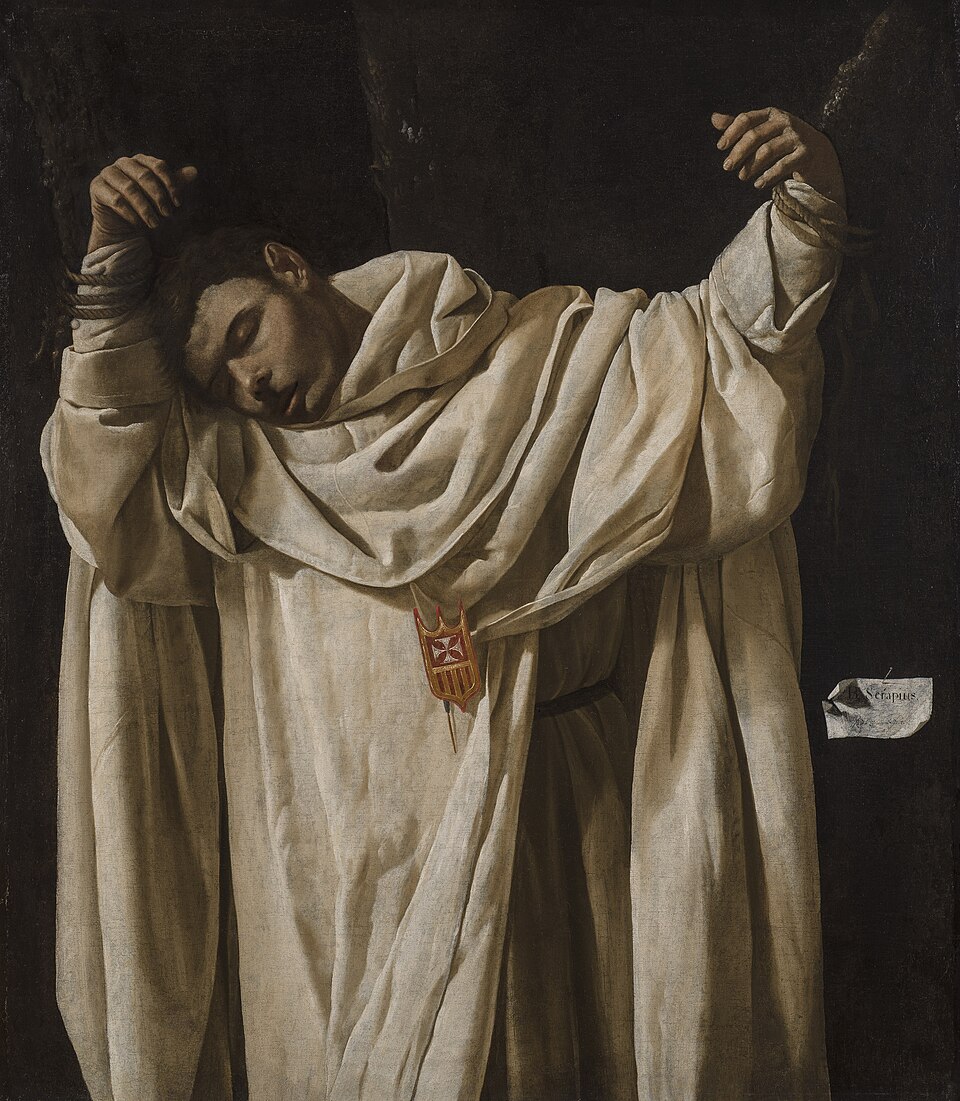
There, he spent years liberating the captive and comforting the tortured. And there, in 1240, he was crucified and dismembered by those who saw mercy as weakness. His final act—a radical refusal to fight back, choosing death rather than abandon the enslaved—became his witness. He didn't die as a warrior defending territory. He died as a servant defending human dignity.
Why People Pray to Serapion of Algiers
People turn to Serapion when battling their own contradictions—when they've made choices they regret, served causes that left them empty, or fear they're too stained by their past to change. His life insists that transformation is possible at any cost. He's the patron for those working in criminal justice reform, refugee advocacy, and prisoner rehabilitation—for anyone fighting modern slavery in all its forms. Serapion reminds us that true strength lies not in perpetuating harm, but in breaking cycles of violence.
Lasting Impact
Serapion became the first Mercedarian martyr, canonized in 1728, blazing a path that transformed his Order into a global force for liberation. His life rewrote the narrative of Christian heroism: heroism isn't conquest—it's captivity endured for the sake of the captive. Seven centuries later, his example still challenges systems of exploitation and inspires movements of radical mercy.