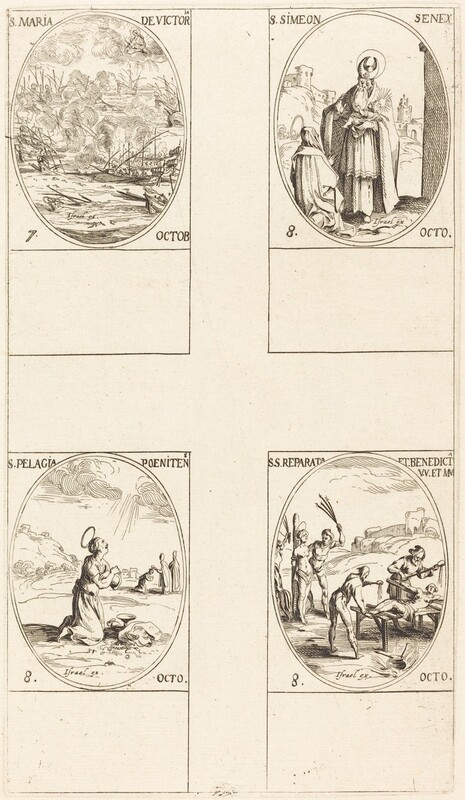
Their Story
Reparata was barely more than a child—somewhere between eleven and twenty years old—when the Roman Empire's persecution machinery turned toward her. Living in Caesarea during Emperor Decius's reign, she faced an impossible choice: renounce Christ or face unspeakable torment. Most would have crumbled. Most did.
But something burned deeper in this young girl than fear. When her persecutors ordered her to deny her faith, she refused. When they attempted to burn her alive, a miraculous rain saved her—yet rather than break her spirit, it seemed to fortify it. They forced boiling pitch down her throat. Still she stood firm. Sources describe a teenager confronting grown soldiers, unflinching in her conviction, her body ravaged but her will untouched.
What made Reparata extraordinary wasn't the absence of fear—it was her refusal to let fear dictate her answer. In a moment when power seemed absolute and resistance seemed futile, she chose to be the one thing her tormentors couldn't control: her own conscience. That choice—made alone, made young, made in agony—echoes across seventeen centuries. She became a saint not because suffering was glorified, but because she proved that some things matter more than survival itself.
Why People Pray to Reparata
In our age of relentless pressure—to conform, to compromise, to simply keep quiet—Reparata stands as a quiet revolutionary. People pray to her when facing impossible choices, when their values collide with the world's demands, when they need the courage to say 'no' even when saying 'yes' would be easier. She's the patron of those who refuse to betray themselves, no matter the cost.
Lasting Impact
Reparata became the patron saint of Nice and Florence, her story preserved and venerated across Catholic Europe for over 1,700 years. Cathedrals bear her name. Her feast day endures. She remains a symbol of uncompromised conviction—proof that one teenager's refusal to break can inspire countless generations to find their own courage.