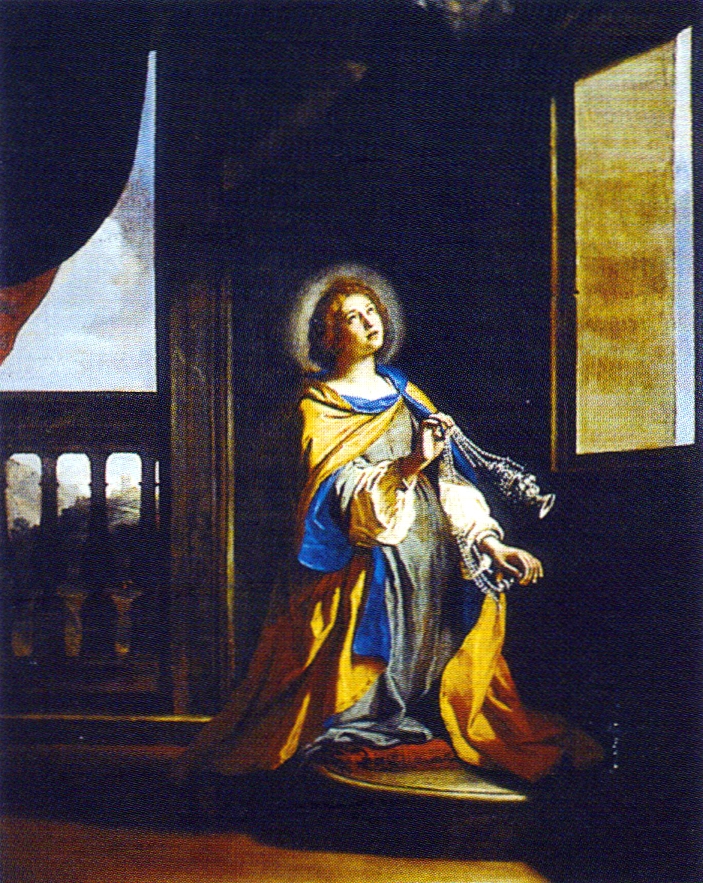
Their Story
Palatia carried the weight of privilege like a gilded cage. Born into Roman aristocracy, she possessed everything the empire promised: power, wealth, untouchable status. Yet something was missing—a hunger her luxuries couldn't satisfy. Then Laurentia entered her life: not as a social equal, but as her wet nurse and enslaved servant. It was an unlikely friendship, one that defied every Roman law and social boundary. Laurentia possessed something Palatia desperately sought: genuine faith, unshakeable and radiant. The servant became the teacher.
But conversion came with a price Palatia hadn't anticipated. Choosing Christ meant renouncing her family's expectations, abandoning the security of Roman citizenship, and standing openly against the state. When Emperor Diocletian's persecution intensified in 302 AD, it became a death sentence. Both women—the aristocrat and her enslaved companion—were arrested in Fermo, near Ancona. They faced their final hours not separately, but together, bound by something deeper than social hierarchy: unshakeable conviction.
Their execution became their testimony. In choosing a crucified criminal's God over Caesar's throne, Palatia and Laurentia revealed what the empire feared most: that true freedom transcends power, and that faith recognizes no class. Their shared martyrdom shattered the boundaries between master and servant, wealthy and poor. Their relics—gathered into a single small bronze urn—symbolized what their lives proved: that in Christ's kingdom, two souls become one.
Why People Pray to Palatias and Laurentia
Today, people turn to Palatia and Laurentia in moments of spiritual crisis—when faith demands everything. They intercede for those wrestling with privilege and purpose, for people caught between worldly security and authentic belief. Many pray to them when crossing social or class boundaries through faith, seeking courage to defy expectations. Their shared martyrdom speaks powerfully to modern struggles with identity, belonging, and the cost of conviction.
Lasting Impact
Palatia and Laurentia's cult flourished across medieval Italy, their relics enshrined in Ancona Cathedral. They remain symbols of radical equality in faith—proving that the gospel erases earthly hierarchies. Their feast day, October 8, continues to honor two women who chose each other and Christ over empire, reminding believers that authentic transformation transcends status.