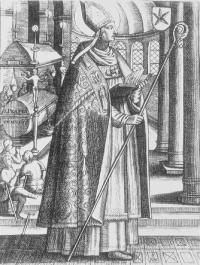
Their Story
Born into an era marked by upheaval and uncertainty, Perpetuus felt a calling to serve God and his community. As the sixth Bishop of Tours, he took on the mantle of leadership in 460 AD, a time when the Church was still finding its footing amidst political instability and religious conflicts. His early years were characterized by a commitment to educating his flock and fostering a sense of unity among the diverse populations in his diocese.
Throughout his tenure, Perpetuus faced numerous challenges, from external threats to the Church's influence to internal disputes among followers. Yet, he remained steadfast, addressing each crisis with wisdom and compassion. His dedication to the spiritual and physical well-being of his community resonated deeply, and he established numerous outreach programs to support the needy. Perpetuus was not just a leader; he was a beacon of hope, reminding his people that faith could conquer even the darkest of times. His legacy culminated in his death on December 30, 490 AD, leaving behind a community transformed by his love and guidance.
Why People Pray to Perpetuus
People turn to Saint Perpetuus today for guidance in leadership and community service. His life reminds us that compassion and dedication can inspire change, making him a patron for those striving to make a difference in their own communities.
Lasting Impact
Saint Perpetuus is remembered as a model of pastoral care and resilience. His influence continues to inspire leaders within the Church and beyond, encouraging them to embody the virtues of compassion and service to others.
Where Venerated
- Worldwide Roman Catholic Church