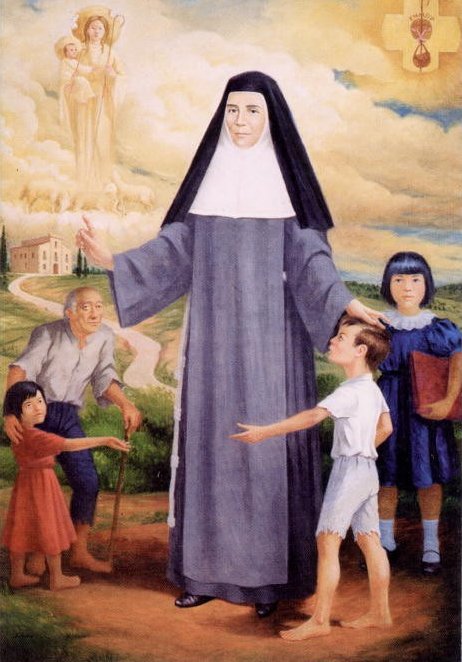
Their Story
Born in 1827 to a farmer-innkeeper family in Catalonia, Peregrina Mogas Fontcuberta grew up in humble circumstances, expected to follow the predictable path of rural Spanish life. Yet something restless stirred within her—a calling she couldn't quite name. When she entered the Capuchin congregation as a young woman, she discovered both her spiritual home and her deepest frustration. Existing structures felt limiting. The needs around her—the poor, the abandoned, the forgotten—demanded more than tradition could offer. For years, she worked within established frameworks, seeking permission to do more, to reach further, to dream bigger. Her superiors recognized her gifts, but institutional boundaries held her back.
Under the spiritual guidance of Josep Tous Soler, Peregrina's vision crystallized. Rather than accept the constraints before her, she founded the Franciscan Missionaries of the Mother of the Divine Shepherd—a new order dedicated to serving those society overlooked. This wasn't rebellion for its own sake; it was love demanding expression. She spent her remaining years building something from scratch, nurturing a community of sisters committed to radical service. By the time she died in Madrid in 1886 at fifty-nine, her order was flourishing. What began as a woman's quiet frustration with "not enough" became an enduring force for good. Pope John Paul II beatified her in 1996, recognizing her as Blessed Peregrina.
Why People Pray to Peregrina Mogas Fontcuberta
People turn to Blessed Peregrina today when they feel called to something greater but blocked by circumstance or institution. She speaks to modern seekers struggling between obedience and conscience, between accepting what is and building what could be. She strengthens those starting social initiatives, launching nonprofits, or reimagining community care. Her intercession brings courage to reformers, clarity to the conflicted, and permission to those who fear that dreaming bigger is somehow selfish.
Lasting Impact
Peregrina's Franciscan Missionaries of the Mother of the Divine Shepherd continue her mission across continents, serving marginalized communities with her pioneering spirit. Her canonization journey—from obscure Catalan nun to beatified saint—demonstrates that institutional change often requires holy patience paired with prophetic vision. She remains a model for faith-driven social innovation.