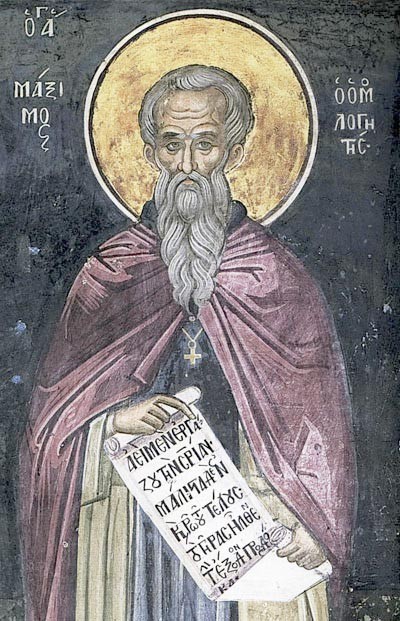
Their Story
Maximus began as a man of the world—educated, ambitious, positioned close to Byzantine Emperor Heraclius himself. He had tasted power, influence, and the validation that comes with serving at the highest levels. Yet something gnawed at him. The answers he found in court philosophy and political maneuvering felt hollow against the deeper questions about God, humanity, and the nature of suffering. Around age 30, he made a radical choice: he walked away from everything.
As a monk, Maximus threw himself into theology with the same intensity he'd once devoted to statecraft. But his greatest trial came later. When the Empire adopted Monotheletism—a theological position he believed betrayed Christian truth—Maximus spoke out. Loudly. Publicly. The price was brutal: exile, interrogation, torture. Authorities severed three fingers from his writing hand and cut out his tongue, hoping to silence him. They almost succeeded. But Maximus had already discovered what no amount of mutilation could take: his voice had become something far stronger than words.
He died in exile, broken in body but unbroken in spirit. Maximus never achieved worldly victory. He never returned to Constantinople in triumph. But he left behind a legacy that transformed Christian thought—a body of work exploring how God and humanity meet in the depths of suffering, mystery, and unflinching love. His weakness became his witness.
Why People Pray to Maximus the Confessor
People turn to Maximus today when facing impossible choices between comfort and conscience. He teaches us that speaking truth carries a price, but silence carries a greater one. In our age of compromise and pressure to conform, his unwavering stand reminds us that some convictions are worth suffering for. He intercedes for scholars, writers, activists, and anyone wrestling with questions too large for easy answers—showing them that rigorous thought and deep faith aren't enemies, but allies.
Lasting Impact
Maximus permanently reshaped Christian theology, synthesizing Greek philosophy with mystical spirituality in ways still studied across all Christian traditions. His concept of theosis—human transformation through union with God—remains foundational to Eastern Orthodox spirituality. Venerated by Catholics, Orthodox, Anglicans, and Lutherans alike, he stands as Christianity's great intellectual martyr, proving that ideas defended with integrity and suffering possess immortal power.