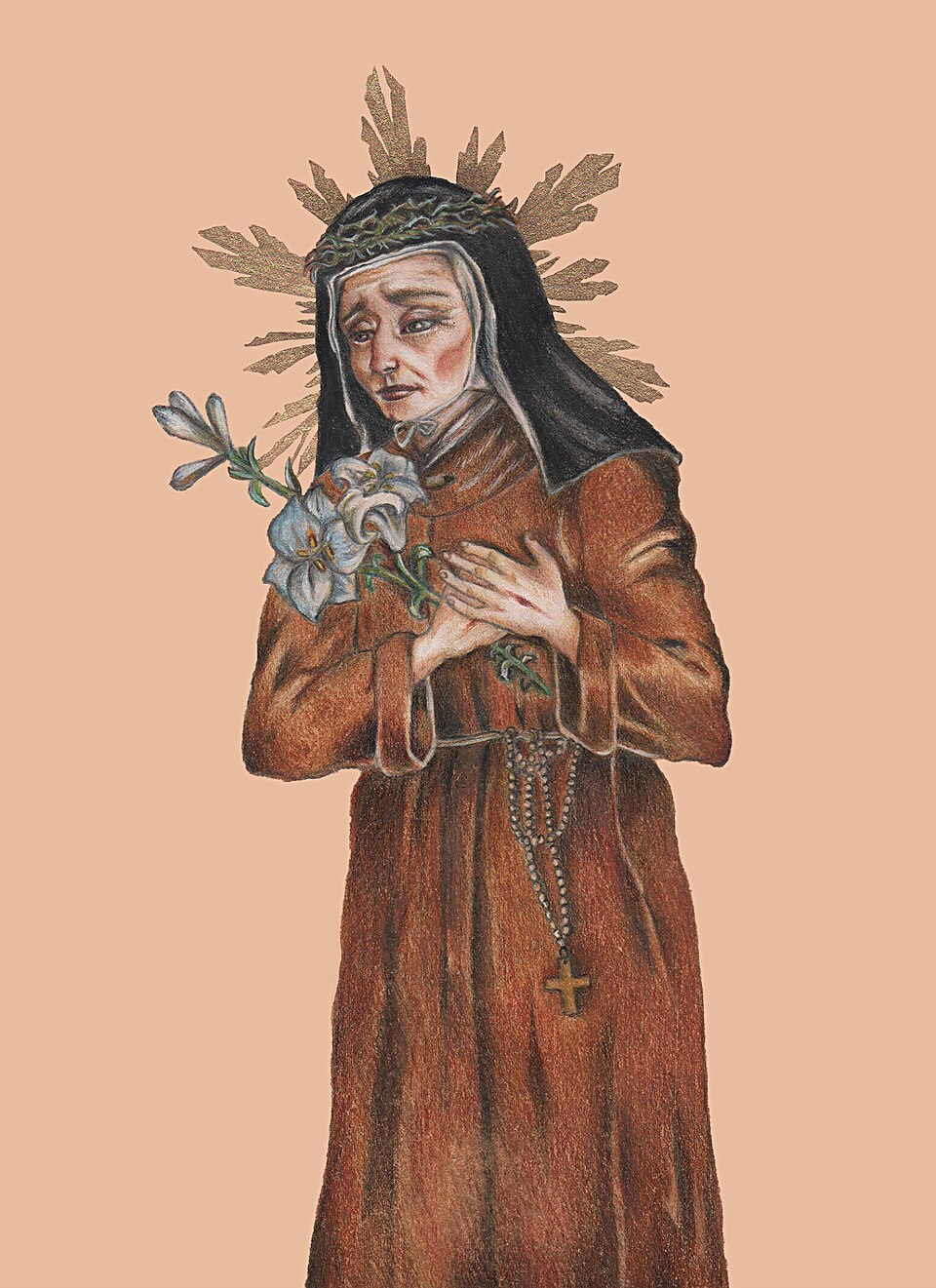
Their Story
Anna Maria Gallo's childhood was a battleground. Born in 1715 in Naples's notorious Spanish Quarter—a red-light district plagued by poverty and violence—she watched her father, a gold-lace weaver, brutalize her family without mercy. His rage was relentless. Physical abuse wasn't punishment; it was his language. She grew up learning fear, not safety. By sixteen, Anna Maria faced another trap: her father demanded she marry a wealthy man she didn't love. It was commerce disguised as destiny. She refused. The defiance cost her—but it freed her.
Instead of submission, she chose the Franciscan Third Order, a radical act for a poor girl with no dowry and an abusive family. In the convent, Anna Maria—now Mary Frances—discovered something her father never gave her: transcendence. She began experiencing visions of Christ's five wounds, stigmata appearing on her own body. These weren't escapes from pain; they were transformations of it. Her suffering, once a mark of shame, became sacred. She understood that her wounds could heal others.
For decades, Mary Frances lived hidden in Naples, nursing the sick, comforting the desperate, especially women trapped in cycles of abuse and hopelessness. She never sought recognition. Yet by her death in 1791, her reputation for holiness had spread across Italy. The Church eventually recognized what the suffering already knew: this woman who endured violence had become a living prayer. She was canonized in 1867, her feast day celebrated October 6th.
Why People Pray to Mary Frances of the Five Wounds
Mary Frances is the patron saint of expectant mothers and women struggling with conception—but her power runs deeper. She represents hope for anyone trapped in cycles of abuse, poverty, or despair. People pray to her for the strength to refuse harmful situations, to transform suffering into purpose, and to find sacred meaning in their wounds. In her life, she showed that surviving violence isn't weakness; it's the beginning of transformation.
Lasting Impact
Mary Frances of the Five Wounds remains a testament to spiritual resilience born from earthly struggle. Her shrine in Naples draws pilgrims seeking healing from trauma and hope for new life. She proved that sanctity isn't reserved for the privileged—it blooms in the darkest quarters, where faith dares to transform suffering into love.