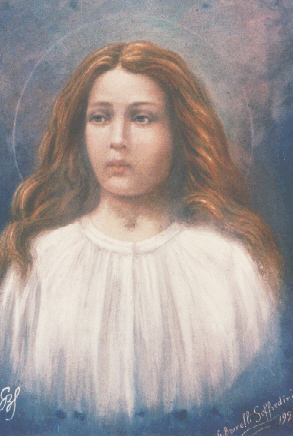
Their Story
Maria Goretti's story begins not in triumph, but in loss. At nine years old, her father died suddenly, shattering the fragile stability of her farming family in rural Italy. Overnight, she stopped being a child. Her mother and siblings fled to the fields to survive, leaving Maria—barely old enough to understand grief—to manage a household alone. The family was forced to share their modest home with another family, the Serenellis, in cramped, unavoidable proximity.
For two years, Maria lived in constant, creeping fear. Alessandro Serenelli, a young man in his twenties, began cornering her in the darkness of their shared home. He touched her when no one was watching. He whispered threats. She felt the walls closing in—trapped between her attacker and the desperate poverty that made escape impossible. She was eleven years old, terrified, with no one who could protect her.
But something unbreakable lived in Maria. When Alessandro's advances turned violent one summer afternoon in 1902, she didn't freeze. She didn't surrender to the inevitability of her circumstances. She resisted. She fought. And when he realized she would never submit—that she would choose death over violation—he killed her in a rage. Maria died at eleven, bleeding on a kitchen floor, her final word a prayer for her murderer's forgiveness.
Her death was not noble. It was brutal, senseless, the tragedy of a child robbed of childhood. Yet in that darkness, something eternal emerged: proof that purity of spirit cannot be conquered, that even a powerless girl can refuse to be broken, that forgiveness can bloom from the deepest wounds.
Why People Pray to Maria Goretti
People turn to Maria today—especially teenagers and young people facing exploitation, harassment, or assault—because she understands their terror without judgment. She is not distant or impossibly holy; she was trapped, hunted, desperate. In a world that silences victims and blames the young, Maria's intercession offers something radical: validation that resistance matters, that saying 'no' is sacred, and that surviving—or not surviving—with your spirit intact is victory. She is also the saint of those seeking forgiveness, including for the darkest sins, because she forgave even her murderer.
Lasting Impact
Maria's canonization in 1950 shocked the world—the Church recognized a child martyr whose 'crime' was refusing assault. She became the patron saint of sexual abuse survivors, chastity, and youth facing temptation. Her shrine in Nettuno draws pilgrims seeking healing. Her legacy whispers a dangerous truth to power: the voiceless have a voice that echoes through eternity.