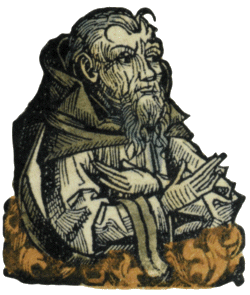
Their Story
Goar was born into privilege in 6th-century Aquitaine, expected to leverage his noble status for influence and power. He was ordained a priest and became known for forceful, commanding preaching—the kind that moved crowds and built reputations. But something gnawed at him. The applause felt hollow. The prominence felt like a cage. He didn't want to be seen; he wanted to serve in secret, to disappear into prayer and simplicity.
So at 33, he abandoned everything. He traveled alone to the remote wilderness near Oberwesel, determined to live as a hermit in total obscurity and poverty. He wanted anonymity so desperately he could taste it. Yet the universe had other plans. His very hiddenness became magnetic. People began seeking him out—pilgrims, travelers, the lost and broken. Word of his holiness spread like wildfire across the region, exactly what he had fled from.
When two pilgrims accused him of hypocrisy before the Bishop of Trier, Goar faced his greatest test: vindication or continued misunderstanding? Legend says a miracle proved his innocence—a moment of divine validation that transformed doubt into faith. Rather than resist his calling, Goar embraced it. He became a beacon, a miracle-worker, a saint. His struggle wasn't to escape his purpose; it was to surrender to it. By accepting that his holiness couldn't be hidden, he finally found peace.
Why People Pray to Goar of Aquitaine
People turn to Saint Goar when they're caught between who they want to be and who the world needs them to be. Whether you're an introvert forced into leadership, a private person thrust into visibility, or someone wrestling with purpose and calling, Goar understands. He's the patron of innkeepers, potters, and vine growers—workers whose hands serve others daily. He reminds us that service doesn't require the spotlight, and that sometimes our reluctance to lead is exactly what qualifies us.
Lasting Impact
Saint Goar's legacy teaches that running from our calling often means running toward it by another path. His life became a church built along the Rhine—a lasting symbol that holiness isn't about hiding or prominence, but about authentic presence. He remains venerated across centuries as proof that our deepest resistance often points to our truest purpose.