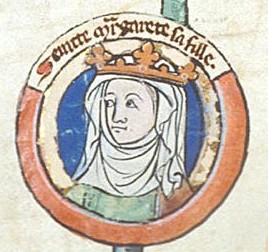
Their Story
Margaret arrived in Scotland as an exile's daughter, uprooted from Hungary and England, carrying the weight of displacement like a second skin. When she married King Malcolm III in 1070, she entered a raw, turbulent realm—a warrior culture steeped in Norse tradition, resistant to change, suspicious of foreign ways. She didn't belong. The court spoke a language she had to learn. The customs felt alien. Many doubted this gentle, contemplative woman could ever truly fit into the rough fabric of Scottish life. By all accounts, she was homesick, grieving the world she'd lost, and terrified of failing in her new role.
But Margaret didn't retreat into bitterness or isolation. Instead, she chose transformation—not just of herself, but of an entire kingdom. She became Malcolm's trusted counselor, gradually introducing Roman Catholic reforms, scholarship, and learning to a land that had grown distant from Rome's influence. She established monasteries, reformed monastic life, and brought books, art, and intellectual rigor to the Scottish court. Her children—including three future kings of Scotland—became architects of a more united, cultured realm. What began as profound alienation became her superpower. Margaret's vulnerability, her outsider's eye, allowed her to see what Scotland could become. She died in 1093, literally heartbroken by news of Malcolm's death in battle, but not before reshaping a nation.
Why People Pray to Margaret of Scotland
People turn to Margaret when they feel displaced, misunderstood, or thrust into unfamiliar circumstances. She speaks to anyone wrestling with belonging—immigrants, those in new jobs or relationships, people rebuilding after loss. Her intercession offers comfort to those who wonder if their foreignness, their difference, might actually be their greatest gift. She teaches us that isolation can become agency.
Lasting Impact
Margaret's legacy endures in Scotland's ecclesiastical reform, her children's lasting dynasties, and her canonization in 1250. She transformed a warrior kingdom into a center of Christian learning and culture. Saint Margaret of Scotland remains the nation's spiritual mother—proof that one person's quiet conviction can reshape history across generations.