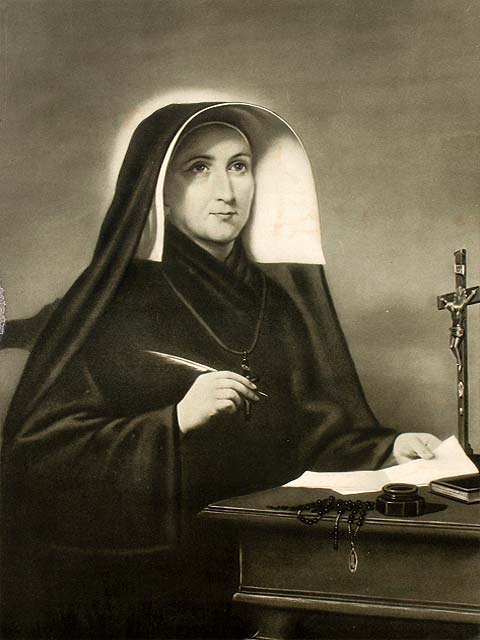
Their Story
Jeanne-Elisabeth Bichier des Âges was born in 1773 into aristocratic comfort—a château, privilege, security. But comfort suffocates when the world is burning. The French Revolution shattered everything around her: institutions crumbled, the Church was hunted, and rural children grew up illiterate and desperate. While others clung to what remained, Jeanne-Elisabeth felt the weight of her own uselessness.
She was not naturally drawn to hardship. Her early life offered no obvious signs of future sainthood—no miraculous visions, no precocious piety. Instead, she faced a quiet crisis of meaning: What was a noblewoman's life worth in a world on fire? The question haunted her until she met Andrew Fournet, a priest as restless as she was. Together, they didn't retreat into prayer. They acted. In 1807, they founded the Sisters of the Cross, a community dedicated to the radical belief that poor rural children deserved education and poor families deserved care. No grand theology. No comfortable monastery. Just hands in the soil, teaching children to read, nursing the sick, staying present to those society had abandoned.
For thirty years, Jeanne-Elisabeth lived among the people she served. She didn't descend to help them—she descended to join them. She inspired a second community of missionary priests. She transformed a region. She died at her family's château in 1838, not in victory but in faithful presence. The Church canonized her in 1947, recognizing what her life had always whispered: holiness is what happens when privilege chooses solidarity.
Why People Pray to Jeanne-Elisabeth Bichier des Ages
People turn to Jeanne-Elisabeth when they feel paralyzed by their own advantages—when guilt, privilege, or comfort seems obscene against others' suffering. She teaches the prayer of action: how to move from sympathy to solidarity, from guilt to purpose. Educators, social workers, and those called to serve the marginalized invoke her name. She reminds us that transformation begins not with feeling good about helping, but with the stubborn, daily choice to show up.
Lasting Impact
The Sisters of the Cross and Sisters of St. Andrew continue her work across continents. But her deeper legacy lives in anyone who has abandoned comfort for presence, privilege for solidarity. She proved that aristocracy's highest calling wasn't to preserve itself—it was to dissolve itself in service. Her life remains a quiet revolution.
Where Venerated
- Roman Catholic Church<br> Sisters of the Cross, Sisters of St