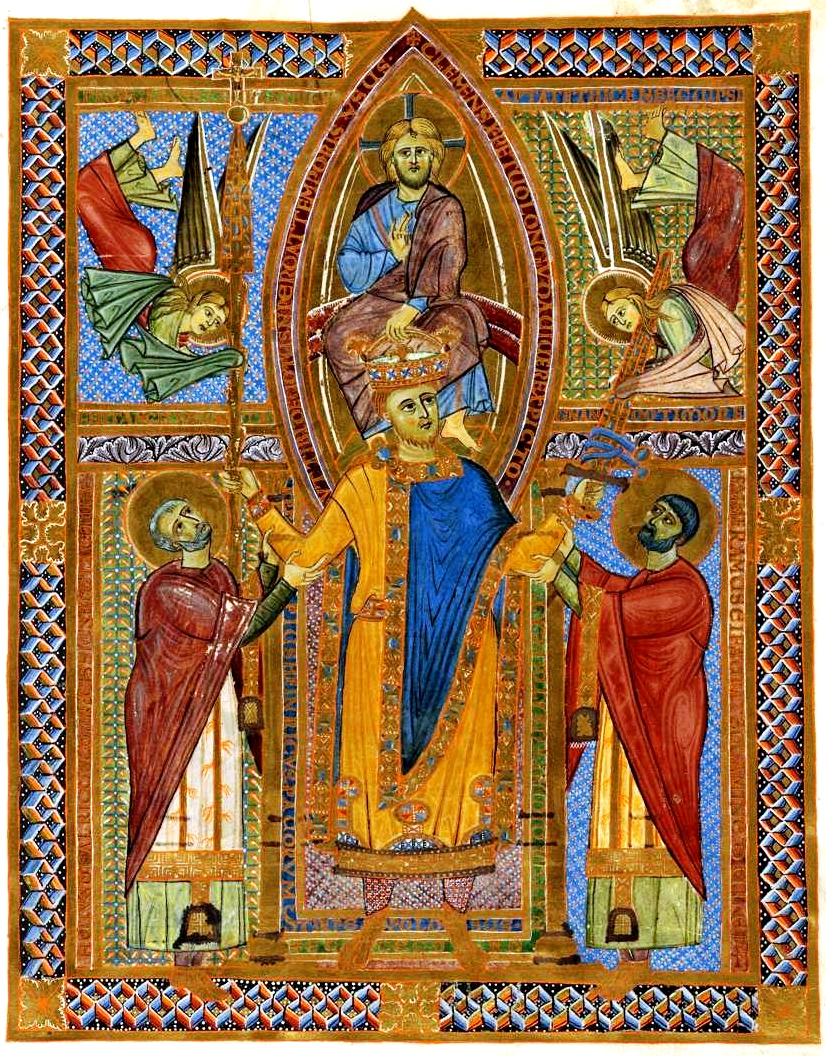
Their Story
Henry II was born into privilege but not certainty. As a young Duke of Bavaria, he inherited lands and titles but faced a deeper crisis: how does one rule justly when power itself corrupts? The early years tested him brutally. He was stripped of his duchy in 1004, cast into political exile by forces beyond his control. For five agonizing years, Henry watched from the margins as others claimed authority he believed was rightfully his. Bitterness could have consumed him. Instead, something shifted.
When the throne of the Holy Roman Empire unexpectedly opened to him in 1002, Henry didn't seize it as conquest. He accepted it as calling. For 22 years, he reigned not as a tyrant but as a reformer—a man haunted by the corruption within the Church itself. He pushed for clerical reform with fierce determination, knowing full well that challenging entrenched power meant making enemies of princes and bishops. His marriage to Cunigunde became a partnership in holiness rather than political alliance. Together, they lived in perpetual chastity despite being crowned sovereigns—a radical witness to sacrifice that scandalized courtiers.
Henry's final years reveal his deepest transformation. Plagued by illness and the weight of decisions that shaped nations, he withdrew increasingly to prayer and contemplation. He founded monasteries, especially the great cathedral at Bamberg, as monuments not to his power but to his repentance. When death approached in 1024, near Göttingen, he went peacefully—a man who had surrendered his throne to God long before his body released it.
Why People Pray to Henry II, Holy Roman Emperor
Henry II speaks to anyone caught between duty and conscience, ambition and integrity. In our age of compromised leadership and institutional corruption, people turn to him for courage to reform systems from within—to refuse complicity while bearing the weight of responsibility. He intercedes for those struggling with power itself: politicians, executives, anyone wrestling with whether their position serves truth or merely self-interest. His witness to marital fidelity and spiritual partnership also reaches modern couples seeking deeper sacred unity beyond romance.
Lasting Impact
Henry II's reign marked a pivotal moment in Christendom: the elevation of spiritual reform above political expediency. His insistence that emperors answer to God's law rather than mere tradition helped reshape medieval governance. He was canonized as a saint in 1146, remembered not for conquests but for conviction—proof that true power lies in surrendering it.