Their Story
Gebhard's story begins with loss. His mother died bringing him into the world in 949—a wound that marked him before he could even speak. As the youngest son of Count Ulrich of Bregenz, he could have claimed privilege and comfort. Instead, he was raised by his uncle, Bishop Conrad, in the cathedral school at Constance. This education was meant to secure his position. But something deeper was awakening in him: a restlessness with the way things were.
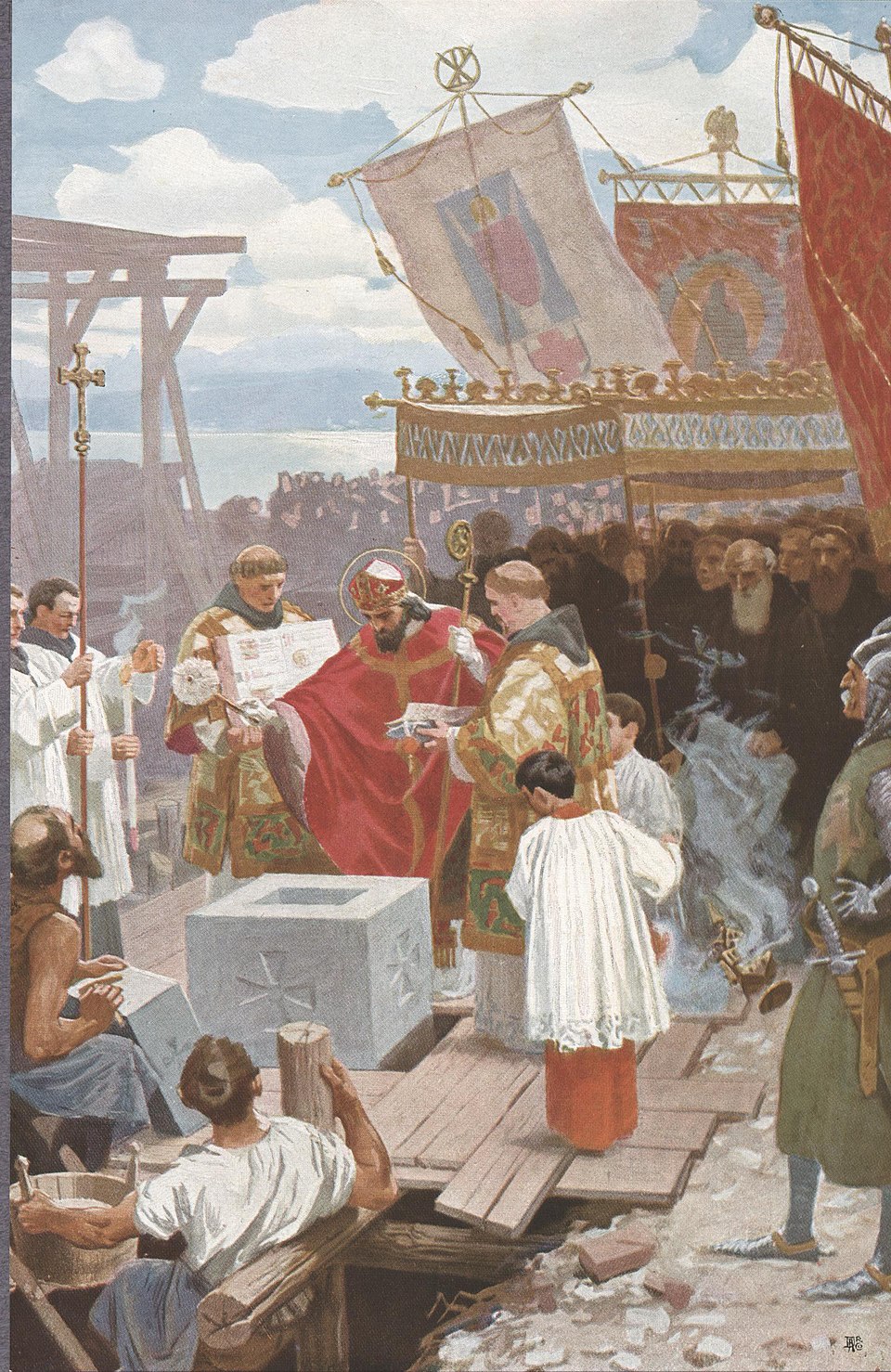
When Emperor Otto II appointed him Bishop of Constance in 979, Gebhard faced a choice. He could have been a ceremonial leader, collecting tithes and performing rituals. Instead, he became obsessed with a radical question: How do we actually change suffering? Not through almsgiving alone, but through transformation. In 983, he founded Petershausen Abbey on the Rhine's opposite shore—a monastery that became a beacon for reform. But his most revolutionary act came in 990. Gebhard gathered the serfs on his estate and did something virtually unthinkable for the 10th century: he systematized their access to skilled trades. Cooks, millers, cobblers, carpenters—he didn't just permit this; he mandated it. He fed them from the abbey's own stores and ensured their children could inherit their craft and dignity.
He died in 995 at just 46, having spent his short life proving that true holiness isn't about withdrawing from the world's pain—it's about reimagining systems so the forgotten can stand on their own.
Why People Pray to Gebhard of Constance
People turn to Gebhard when systems feel rigged and compassion feels pointless. He shows us that structural change—real, practical, material change—is itself a form of prayer. Workers and artisans invoke him when seeking dignity in their labor. Those fighting poverty and inequality find in him a saint who didn't offer pity but partnership, not charity but capability. In our age of endless aid programs that rarely empower, Gebhard reminds us: true love teaches people to build.
Patron Saint Of
Lasting Impact
Gebhard's vision of compassionate reform shaped medieval monastic practice and influenced how the Church approached poverty. Petershausen Abbey became a model for Benedictine innovation. His feast day (August 27) endures across Catholic and Orthodox traditions. He remains patron of Constance and Vorarlberg, regions that remember him not as a distant saint, but as the bishop who believed the poor deserved more than mercy—they deserved mastery.