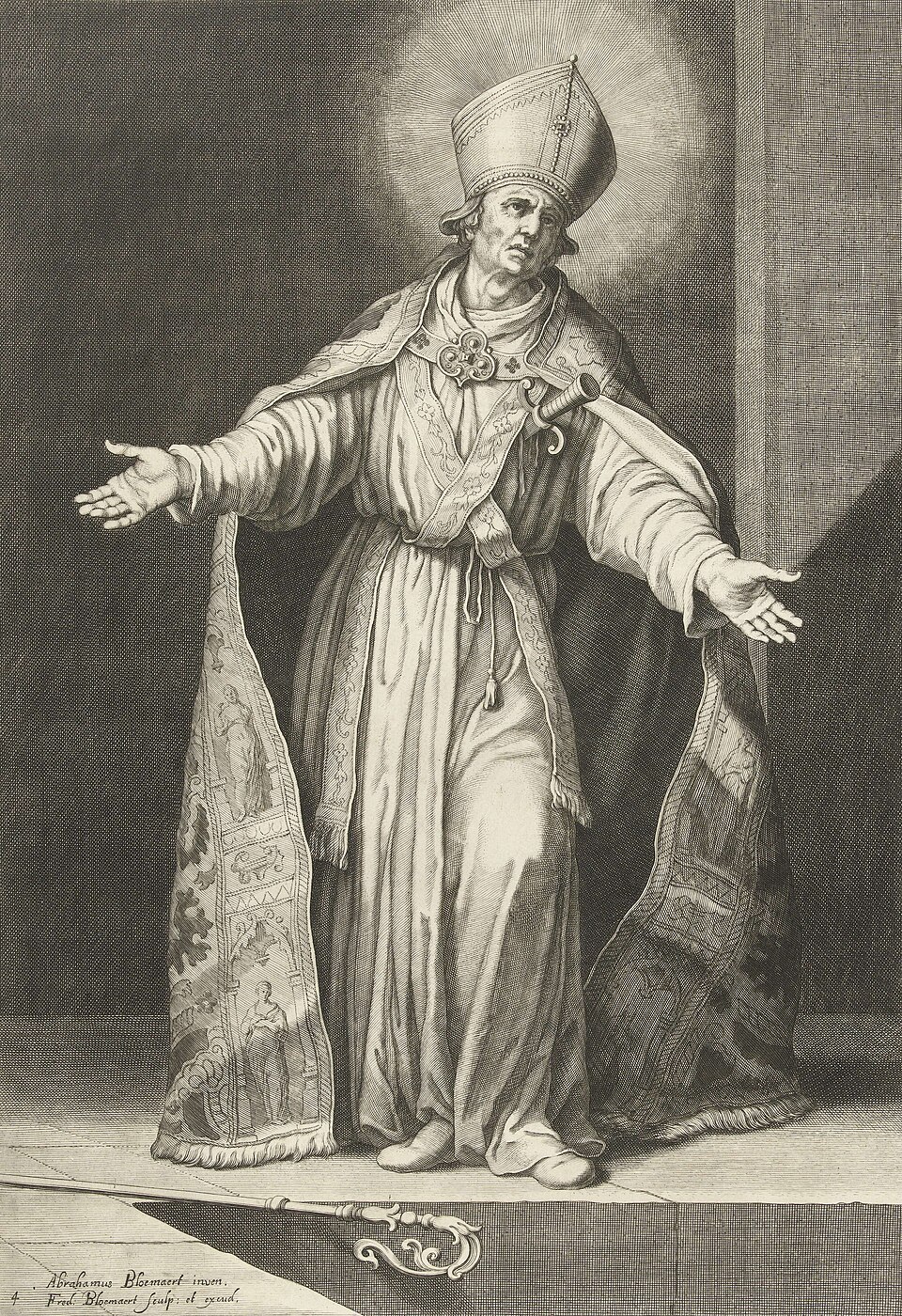
Their Story
Frederick emerged from Frisian nobility around 780 with every advantage—except clarity of purpose. Raised by clergy in Utrecht under Bishop Ricfried, he received an education many would envy, yet struggled to discover what God truly asked of him. The weight of his family's expectations, combined with the turbulent politics of early medieval Frisia, left him searching for meaning beyond titles and bloodlines.
Something shifted. Frederick answered a deeper call, abandoning the comfort of his aristocratic heritage to embrace the priesthood. He rose to become Bishop of Utrecht (815/816–838), a position that thrust him into the violent religious and political conflicts of his era. As bishop, Frederick stood firm in his convictions, defending the Church's authority against those who opposed Christian consolidation in the region.
His unwavering commitment ultimately cost him everything. Around 838, Frederick was murdered—martyred by enemies who saw his faith as a threat. Yet in his violent death, he achieved what his life had been building toward: a witness so profound that both the Catholic and Eastern Orthodox Churches venerated him as saint. His struggle wasn't one of doubt overcome in solitude, but of conviction tested and proven through sacrifice.
Why People Pray to Frederick of Utrecht
People turn to Frederick when facing opposition for their beliefs or when called to stand firm despite pressure. In our age of compromise and relativism, his example offers courage: he teaches that conviction rooted in faith can transform suffering into meaning. Those navigating leadership roles, especially in hostile environments, find strength in his steadfastness—proof that one person's integrity can echo through centuries.
Lasting Impact
Frederick's martyrdom strengthened the Church's presence in Utrecht during a critical historical moment. His veneration across both Western and Eastern Christian traditions demonstrates how authentic witness transcends denominational boundaries. He remains a symbol of faithful leadership—not through power, but through the willingness to sacrifice everything for what one believes.