Their Story
Eadburh's story begins in contradiction. Born to King Penda of Mercia—a fierce pagan warrior—she grew up caught between two worlds. While her father defended the old gods, Eadburh was drawn to Christianity, a faith her father resisted. This wasn't a smooth spiritual awakening; it was a profound internal rupture. She had to choose between loyalty to her royal blood and surrender to her faith. That choice meant leaving the palace, leaving comfort, leaving certainty.
Yet Eadburh didn't flee into isolation. Instead, she partnered with her sister Edith to co-found an abbey near Aylesbury, creating a sanctuary where women could pursue religious life. She became abbess—a position of real authority in a world that rarely granted women power. Her leadership was tested immediately: she had to build community, establish order, mentor younger women in disciplines she herself was still learning. Among those she trained was her niece Osgyth, whom legend claims she miraculously restored to life after a three-day drowning. Whether literal or metaphorical, the message is clear—Eadburh was a healer, a restorer of what seemed lost.
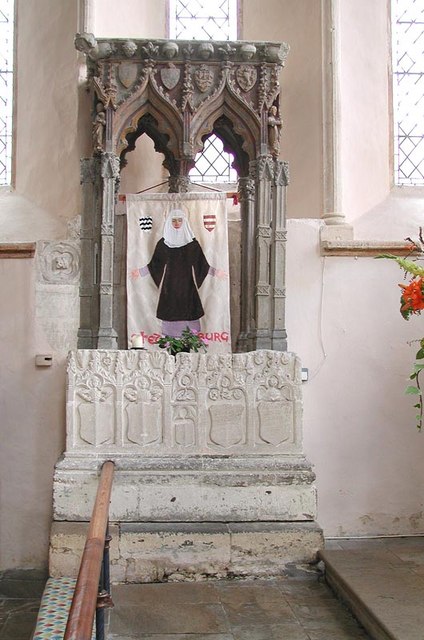
Eadburh lived through spiritual transformation not as a moment but as a lifetime practice. She didn't become a saint by escaping the world; she became one by building something meaningful within it. Her burial place remains unknown, yet her shrine endured—moved from Adderbury to Bicester in 1182, where it still stands. She died around 650, but her witness persisted: a royal woman who chose faithfulness over status, community over comfort.
Why People Pray to Eadburh of Bicester
Eadburh speaks to those caught between competing loyalties—family expectations versus personal calling, tradition versus transformation. People pray to her when navigating faith journeys that alienate them from loved ones, seeking courage to honor both their conscience and their relationships. She intercedes for leaders, especially women in positions of authority, who bear the weight of building something meaningful in difficult times. Her example offers permission to choose a countercultural path without bitterness.
Lasting Impact
Eadburh's seven-century presence in English spirituality shaped the architecture of women's religious communities. She demonstrated that royal birth could serve humble purpose, that authority could nurture rather than dominate. Her shrine survived the Reformation, her feast day (July 18) honored across Catholic and Anglican traditions. She remains a quiet witness to the power of choosing faith over fortune.