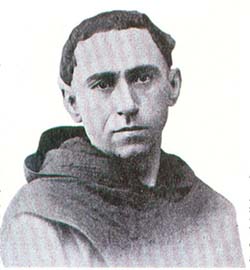
Their Story
Ezequiél Moreno y Díaz was born into modest circumstances in Alfaro, Spain, in 1848—a time when becoming anything meaningful required climbing impossible social barriers. As a young man joining the Augustinian Recollects, he faced the daily grind of monastic life: rigid discipline, endless prayer, and the doubt that plagues every novice wondering if he truly belongs in this calling. Like many religious who came before him, Moreno wrestled with the tension between contemplative solitude and the urgent suffering he witnessed in the world around him.
But something shifted in Moreno's heart. Rather than remain cloistered, he answered the call to missionary work, eventually traveling to the Americas where colonial violence and spiritual desolation had ravaged indigenous communities. His transformation came not through escape from the world's pain, but through direct engagement with it. As Bishop of Pasto (in present-day Colombia), Moreno became a prophetic voice—challenging injustice, defending the vulnerable, and rebuilding faith in regions torn apart by conflict and indifference.
By the time of his death in 1906, Moreno had become a living bridge between the contemplative and active life—proof that a soul devoted to God need not choose between prayer and action, between inner peace and outer witness. His canonization in 1992 recognized a man who refused the comfort of passivity and instead bore the weight of authentic Christian witness.
Why People Pray to Ezequiél Moreno y Díaz
People seek Moreno's intercession when facing the tension between personal faith and social responsibility. In our fractured world, many feel paralyzed by suffering they cannot personally fix—wondering if prayer matters, if one person's witness counts. Moreno reminds us that spiritual depth and prophetic courage are not opposites. He teaches modern believers how to hold both contemplation and active compassion, making him a patron for activists, social workers, and anyone struggling to live their faith authentically amid injustice.
Lasting Impact
Saint Ezequiél Moreno y Díaz stands as a model of integrated holiness—a bishop who refused the isolation of office, instead embedding himself in suffering communities. His life demonstrates that sainthood is not withdrawal from the world but radical engagement with it. Nearly a century after his death, his example continues inspiring religious and lay workers who seek to combine deep spiritual practice with prophetic action for justice.