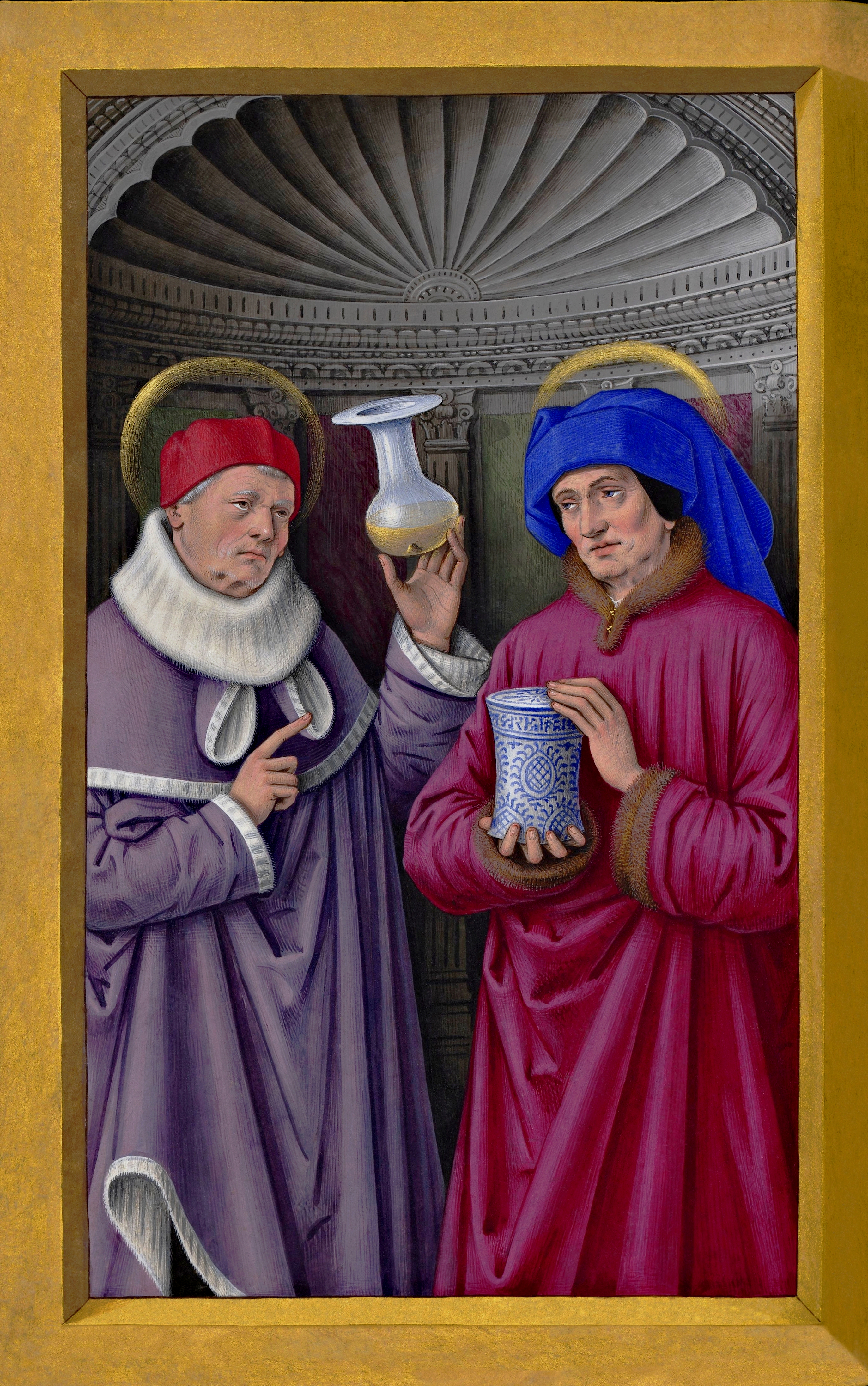
Their Story
Cosmas and Damian were born into privilege in 3rd-century Arabia—twin brothers with access to education, status, and the means to build comfortable lives. Yet something within them resisted the easy path. They became physicians, which promised wealth and respect. But as they treated patients, a gnawing tension grew: how could they charge desperate people for healing? How could they accept payment from those who had nothing?
Their struggle was intimate and daily. Other doctors ridiculed their refusal to profit. Families questioned their choices. The brothers wrestled with doubt—was radical generosity foolish idealism or divine calling? They chose conviction over comfort, treating the poor, the enslaved, and the abandoned without asking for coin. Their reputation spread not as prestigious healers, but as those mad enough to believe healing was a gift, not a commodity.
When persecution of Christians intensified under Diocletian's reign, their faith was tested in the furnace. Imprisoned and tortured in Cilicia, they remained unbroken—their witness to love stronger than fear. They were martyred around 287 AD, becoming far more powerful in death than in life. Their legacy transformed them from local healers into eternal intercessors, canonized across every Christian tradition, their names invoked by surgeons, physicians, and the suffering for nearly 1,800 years.
Why People Pray to Cosmas and Damian
Cosmas and Damian speak to modern crises of healthcare, compassion, and meaning. People pray to them when facing medical uncertainty, burnout in healing professions, and the tension between survival and service. They intercede for those questioning whether generosity is sustainable, whether giving without return is possible. In our age of commodified wellness, they remind us that true healing transcends transaction—it emerges from love.
Lasting Impact
These twin martyrs revolutionized how Christian communities understood healing and service. Their feast days remain celebrated globally; their basilicas in Rome, Madrid, and Italy draw pilgrims seeking wholeness. They embody the conviction that professions—medicine, care, counsel—are sacred vocations, not merely livelihoods. Their uncompromising witness shaped centuries of healing work rooted in human dignity rather than profit.