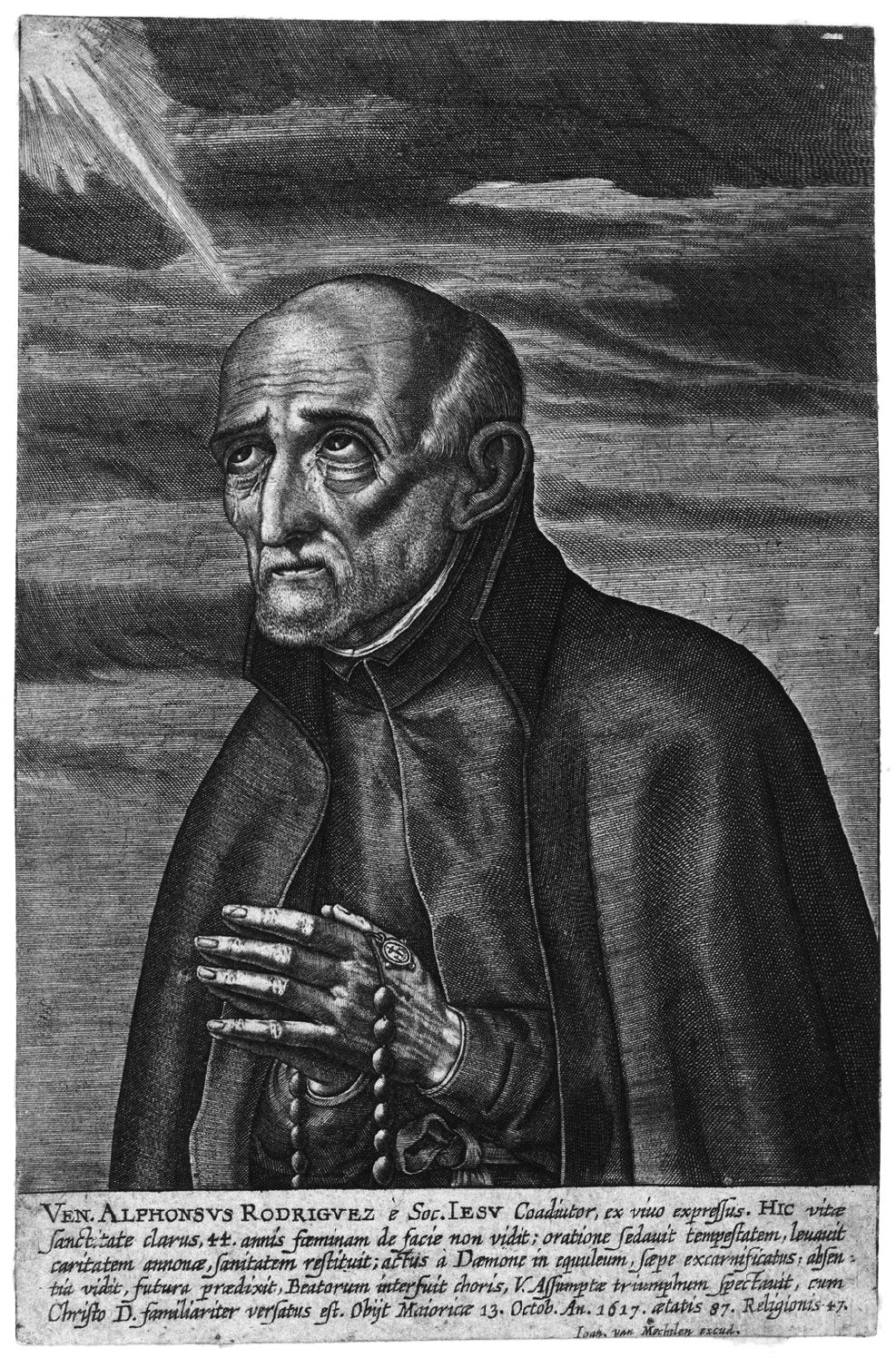
Their Story
Alphonsus Rodriguez was supposed to have it all figured out. Born into a merchant family in sixteenth-century Spain, he was sent to the prestigious Jesuit college at Alcalá at age twelve—a golden opportunity. But two years later, it fell apart. His father died, and duty called him home to help his mother. Education abandoned. Dreams deferred.
At twenty-six, he tried again. He married María Suarez, had three children, and built a respectable life. Then grief struck like lightning. His wife died. Two of his children followed. By thirty-one, Alphonsus was hollowed out—a man who had lost everything that should have mattered. In that devastation, something broke open. He felt a calling toward religious life, toward the Jesuits who had first inspired him as a boy.
But the Jesuits refused him. He lacked education. He was too old. He had no credentials. Most men would have broken completely. Instead, Alphonsus did something radical: he accepted the 'no' and entered the Jesuits anyway—not as a priest or scholar, but as a *lay brother*. For forty-six years, he served as a doorkeeper and caretaker at the Jesuit college in Palma de Mallorca. He swept floors. He greeted visitors. He lived in obscurity, transforming menial labor into contemplative prayer. His cell became a monastery. His doorway became a pulpit. By the time he died at eighty-five, thousands recognized him as a living saint—not despite his failures, but because he had transmuted them into something luminous. He proved that holiness isn't reserved for the educated or the successful. It belongs to anyone willing to serve faithfully, even when the world says they're nobody.
Why People Pray to Alphonsus Rodriguez
People turn to Alphonsus today when they feel rejected, unqualified, or left behind by life. In a world obsessed with credentials and achievement, his story whispers a revolutionary truth: your failures don't disqualify you from purpose. Parents who've lost children find solace in his grief transformed into grace. The unemployed and overlooked discover dignity in his humble doorkeeper's life. He teaches us that sanctity lives in small, faithful acts—and that being 'nobody' by worldly standards might be the pathway to becoming somebody in God's eyes.
Lasting Impact
Alphonsus Rodriguez redefined what holiness looks like. He canonized the ordinary—the janitor, the reject, the grieving parent doing small things with great love. His legacy remains a silent revolution against performance and prestige, reminding each generation that the sacred dwells in doorways, not just cathedrals. He was canonized in 1888, nearly three centuries after his death, a testament to how timeless his witness remains.