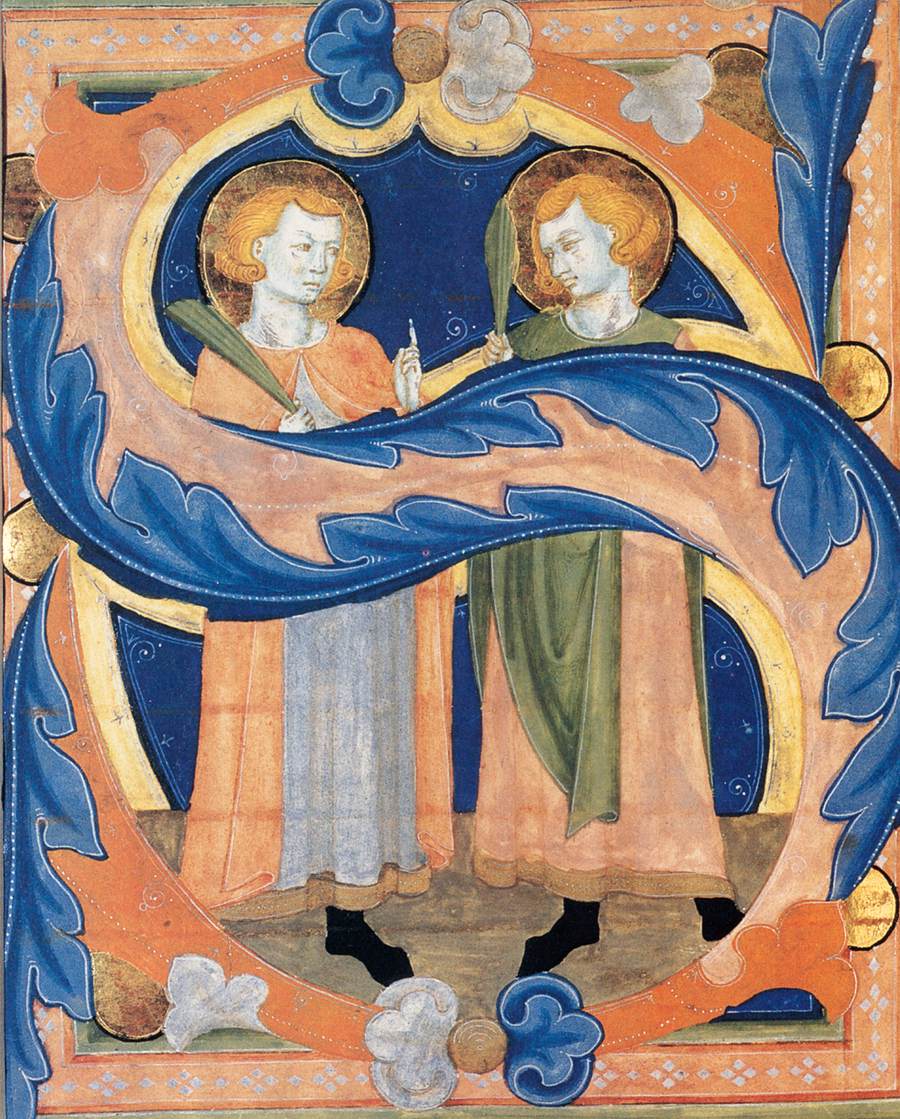
Their Story
Alphaeus and Zacchaeus were not born into privilege or power. One was a deacon in a small Palestinian town; the other, his cousin, served as a lector and exorcist in Caesarea. They were ordinary men with ordinary fears—family, pain, the weight of choice. But when Emperor Diocletian's persecution swept through Palestine in 303 AD, these two discovered something extraordinary within themselves.
The Roman authorities didn't see them as threats at first. They were just two among many Christians brought to Caesarea, expected to perform a simple act of worship to the Roman gods—a political gesture, nothing more. Thousands complied or were quietly falsely attested to have done so. But Alphaeus and Zacchaeus refused. That refusal cost them everything.
They were chained, whipped until their flesh tore, then stretched in stocks so violently their bodies nearly split apart. Yet according to Eusebius, who witnessed these events, Zacchaeus remained cheerful in his cell, praising God through the night. When Alphaeus joined him in prison, both men strengthened each other—not through denial of suffering, but through a deeper conviction that their bodies were not their truest selves. At their third trial, they were condemned to death. They were beheaded together on November 17, 304 AD, having never renounced their faith. In their final moment, they possessed something Rome's power could never take: the freedom to choose what they believed.
Why People Pray to Alphaeus and Zacchaeus
Alphaeus and Zacchaeus speak to anyone facing impossible choices—those pressured to compromise their values for survival, safety, or acceptance. People pray to them when standing firm feels impossible, when the cost of integrity seems too high, when fear whispers that surrender is the only path. They remind us that true strength isn't about never breaking; it's about what we refuse to break inside ourselves, no matter what happens to our bodies or circumstances.
Lasting Impact
Their martyrdom became a cornerstone of early Christian resistance during Diocletian's persecution. Eusebius recorded their story as proof that ordinary believers could possess extraordinary courage. Nearly 1,700 years later, Alphaeus and Zacchaeus remain symbols of steadfast faith—reminding each generation that conviction rooted in love, not fear, transforms both the martyr and those who remember them.