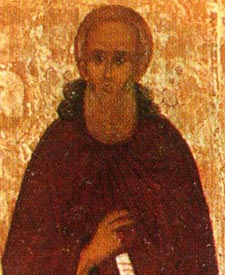
Their Story
Abraham's story begins not with spiritual triumph, but with bodily failure. Born in tenth-century Russia as Abercius, he was a chronically ill child—weak, fevered, isolated. While other boys grew strong, he languished, watching his life slip away. Medical remedies failed. Hope was fading. Then came the turning point: a desperate prayer for healing. When recovery came, it shattered everything he thought he knew. This wasn't mere coincidence. This was divine intervention.
Transformed by this near-death experience, Abraham abandoned his former life and became a monk at Valaam monastery. But his real test lay ahead. He settled near Rostov, on the shore of Lake Nero, where pagan darkness still gripped the land. Nearby stood an ancient stone idol of Veles—a god that terrified the local tribes and enslaved their spiritual imagination. Abraham could have retreated into monastic silence. Instead, he faced his fear. According to tradition, John the Evangelist appeared to him in a vision, offering a cross-crowned staff. Abraham used it to destroy the idol—an act both spiritual and fearless.
What followed was transformation on a massive scale. Where paganism once ruled through fear, Abraham built monasteries and churches. His preaching didn't condemn; it invited. Entire communities chose baptism, not from coercion, but from witnessing a man whose own suffering had taught him compassion. The Rostov princes recognized his authority, ordaining him Archimandrite. By 1077, when Abraham died, he had fundamentally altered the spiritual landscape of his region—all because a sick child learned that illness can become a gateway to purpose.
Why People Pray to Abraham of Rostov
Abraham speaks to those battling chronic illness, invisible struggles, or the fear that suffering renders them useless. People pray to him when facing spiritual darkness—whether external opposition or internal doubt. His example proves that vulnerability is not weakness; it's the soil where spiritual authority grows. Modern believers turn to Abraham when they need courage to stand against prevailing cultural tides, or when they're learning to transform personal pain into service.
Lasting Impact
Abraham of Rostov stands as a bridge between pagan and Christian Russia, showing how one transformed life can redirect an entire culture. His monasteries became centers of spiritual and intellectual life for centuries. He remains venerated in both Eastern Orthodox and Roman Catholic traditions, canonized in 1549, his feast day celebrated October 29. His legacy: that the wounded healer changes worlds.