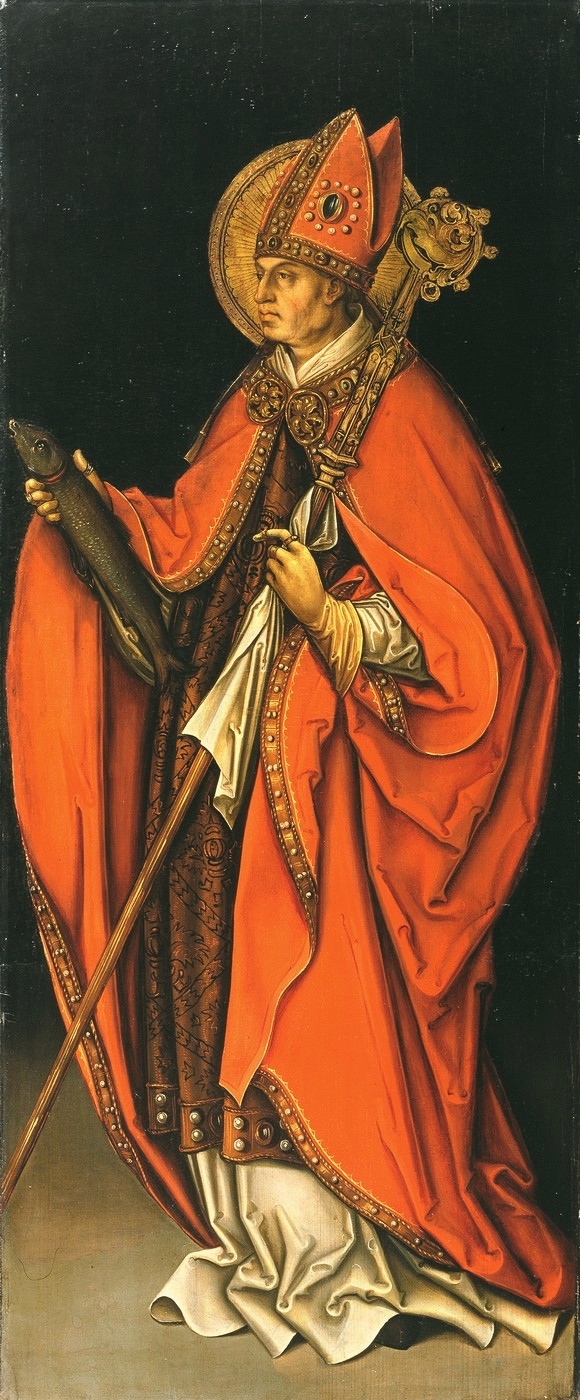
Their Story
Ulrich arrived in Augsburg around 923 as a young bishop stepping into chaos. The medieval city was fractured—politically unstable, spiritually adrift, vulnerable to invasion. He wasn't a fiery reformer with grand visions. He was quiet, methodical, sometimes doubted. Yet for fifty years, he simply showed up. He built churches. He fed the hungry. He walked among plague victims and prisoners. When Hungarian armies threatened Augsburg in 955, Ulrich didn't flee or pray from the safety of the cathedral. He rode into battle alongside soldiers, blessing them, standing with them. His companion fell into a river during their escape—Ulrich turned back, not knowing if he'd survive himself. He did. His companion didn't. That loss haunted him, but he never let it harden his heart.
Ulrich's power wasn't in dramatic miracles or ecstatic visions. It was in relentless presence. In his eighties, still serving his flock, still walking the streets of Augsburg, still listening to the poor and forgotten. When he died at 83 in 973, Pope John XV didn't wait for centuries of scrutiny. He canonized him immediately—the first saint ever canonized by papal authority alone. Why? Because the city itself testified: this man changed us. Not through conquest or innovation, but through faithfulness.
Why People Pray to Ulrich of Augsburg
Pregnant women and those facing difficult births call on Ulrich because he stood with the vulnerable when society ignored them. Modern people pray to him during crises of leadership—when institutions feel broken and hope seems naive. He teaches that steady presence, small acts of mercy, and refusal to abandon your post matter more than grand gestures. In times of uncertainty, Ulrich reminds us that transformation happens through decades of showing up, not dramatic overnight change.
Patron Saint Of
Lasting Impact
Ulrich's canonization revolutionized the Church itself—it shifted power to Rome and established papal authority over sainthood. But his deeper legacy is simpler: he proved that ordinary faithfulness, lived over a lifetime in one place, can reshape a city's soul. Augsburg became a spiritual center because one man refused to leave.