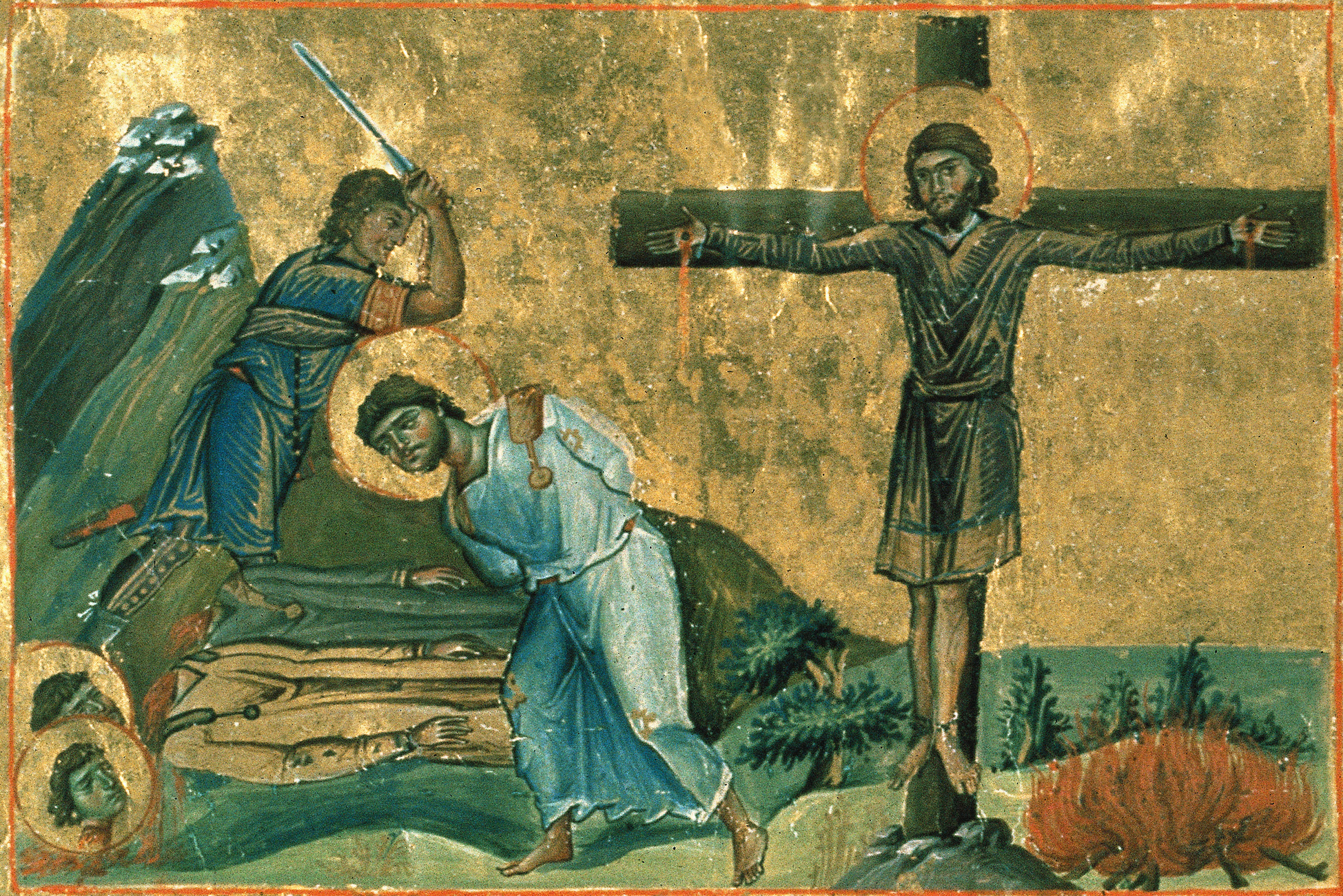
Their Story
Theodore was a Roman soldier in Pamphylia—a man trained to obey, to follow orders without question. Yet something shifted when the emperor Elagabalus demanded his allegiance to pagan gods. For Theodore, this wasn't abstract theology; it was a direct conflict between the system that fed him and the faith that had transformed him. His mother Philippa stood beside him, a woman who had raised a son only to watch him face execution. They weren't mystics or theologians hiding in caves. They were flesh and blood: afraid, vulnerable, ordinary.
Then came their companions: Socrates, another soldier wrestling with the same impossible choice; Dionysius, a former pagan priest who had abandoned his entire identity when he converted to Christianity; and Dioscorus, whose name would be remembered alongside theirs for eternity. These five didn't seek martyrdom as glory. They faced crucifixion in 220 CE because staying silent meant betraying what had become real to them. In that moment of ultimate powerlessness—nailed to crosses in a remote corner of the empire—they discovered something the empire couldn't crush: the unbreakable human capacity to choose conscience over survival. Their deaths weren't the end of their story; they became a beacon across centuries, proof that ordinary people can hold firm when everything demands they break.
Why People Pray to Theodore, Philippa and companions
In a world that constantly pressures us to compromise our values, Theodore, Philippa, and companions remind us that integrity matters more than comfort. People pray to them when facing workplace corruption, unjust systems, or the temptation to abandon their beliefs for security. They intercede for anyone torn between obedience to authority and obedience to conscience—showing that choosing what's right often costs something real, but the cost of betraying yourself is far higher.
Lasting Impact
Their martyrdom became immortal testimony in both Catholic and Orthodox traditions, venerated on September 20 and April 21. These five transformed a brutal execution into an eternal statement: that ordinary people possess extraordinary courage when faith becomes non-negotiable. Their names survive not because Rome remembered them, but because the faithful refused to forget.