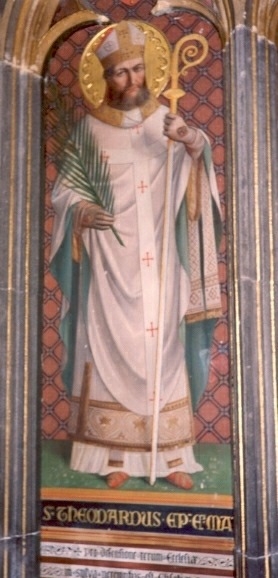
Their Story
Theodard's path to sainthood began not with mystical visions, but with quiet competence and genuine warmth. Born in the Rhineland during turbulent times, he rose through monastic life as an abbot—respected, energetic, beloved by those around him. Yet his greatest test came when power itself became his burden.
As bishop of Maastricht around 663, Theodard inherited a diocese under siege. Frankish nobles were systematically plundering church lands and resources, treating sacred institutions like territories to exploit. Unlike leaders who might have compromised or stayed silent, Theodard felt the weight of his people's suffering. He saw injustice not as inevitable, but as something that demanded confrontation—even from a churchman in his sixties.
Around 670, Theodard made his decision: he would travel through the forest to King Childeric II's court to demand justice. It was a dangerous journey, perhaps even foolish. He likely knew the risks. But some things matter more than safety. Somewhere in the Bienwald forest, probably at the nobles' command, Theodard was murdered—killed for daring to speak what was true. His death transformed him from an effective administrator into a martyr, a witness to the principle that faith demands courage, not complicity.
Why People Pray to Theodard of Maastricht
Today, people turn to Theodard when facing systemic injustice or when they need courage to challenge wrongdoing in their own communities and workplaces. He's the saint for those who feel called to act against corruption but fear the cost—a reminder that integrity sometimes requires sacrifice. Drovers, cattle dealers, and traders invoke him as protector of honest labor and fair dealing in a world quick to exploit.
Patron Saint Of
Lasting Impact
Theodard's martyrdom became legendary across the Low Countries, inspiring the next generation of reformers—including his own nephew, Lambert of Maastricht. His witness shaped the Church's understanding that bishops must be shepherds willing to suffer for their flock, establishing a tradition of pastoral courage that echoes through seven centuries.