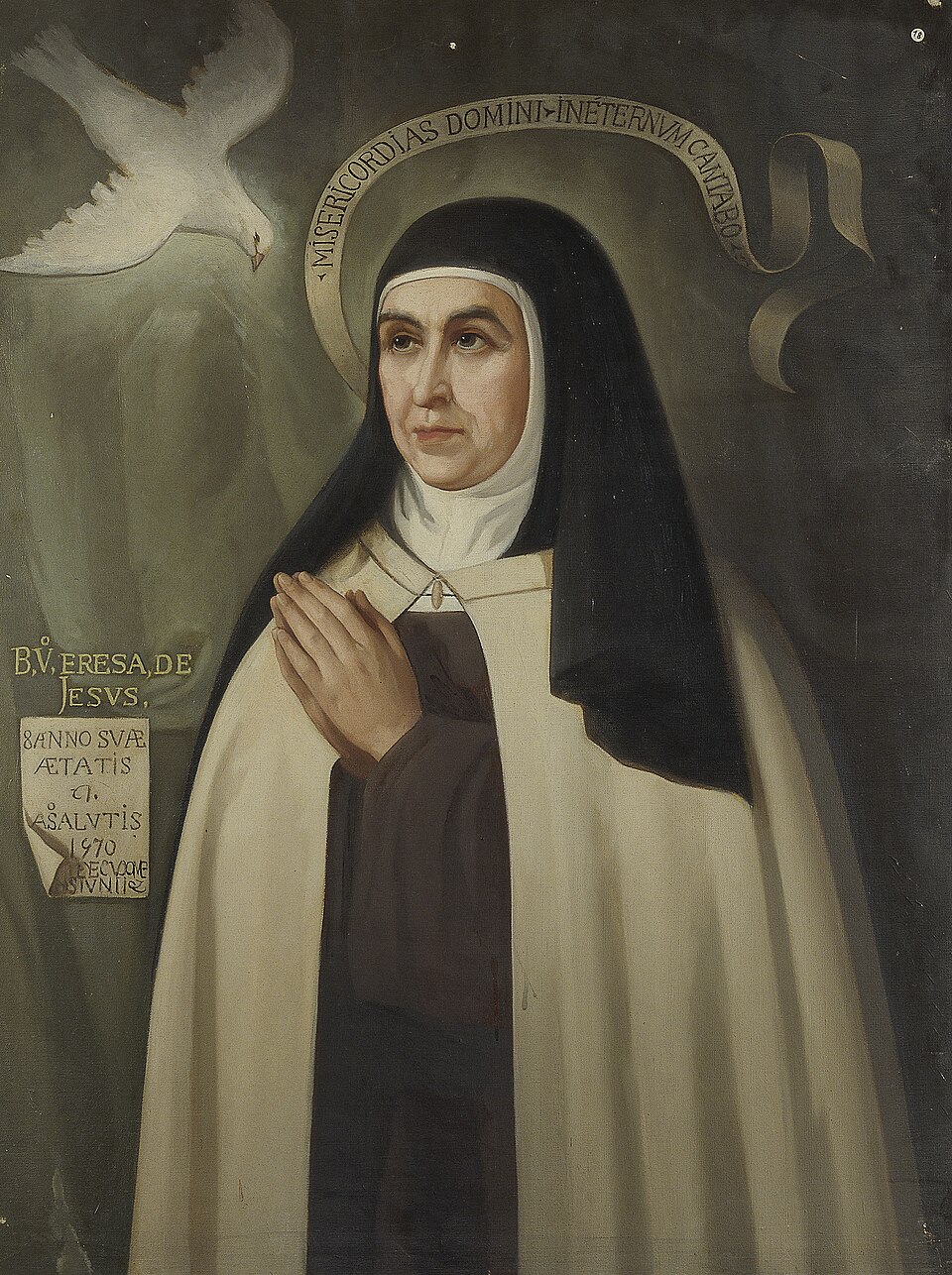
Their Story
Teresa of Ávila (1515–1582) was not born holy—she was born restless. As a young woman in Castile, she entered a Carmelite convent seeking escape, not enlightenment. For decades, she struggled with distraction, doubt, and what she called a divided heart. She craved both worldly pleasures and spiritual peace, unable to fully commit to either. Her prayer life felt empty. She questioned whether God was listening at all.
Then, in her forties, everything shifted. A profound mystical experience awakened Teresa to the reality of God's presence—not as distant doctrine, but as intimate communion. Yet rather than retreat into quiet contemplation, she became a fiery reformer. She founded new convents, challenged church authorities, traveled across harsh Spanish terrain in her sixties despite illness and exhaustion. She wrote with brutal honesty about prayer, doubt, and the soul's journey—work so profound it earned her the title "Doctor of the Church."
What made Teresa extraordinary wasn't the absence of struggle; it was her refusal to hide it. She admitted to anger, ambition, and fear. She described her mystical experiences with sensory vividness—the divine touch that pierced her heart like an arrow. She showed that holiness doesn't mean perfection; it means complete surrender to transformation, even when it terrifies you. Her legacy taught millions that doubt itself can become a doorway to deeper faith.
Why People Pray to Teresa of Ávila
People turn to Teresa today when internal conflict feels overwhelming—when faith and doubt wage war inside them. She speaks to those exhausted by the demand to "have it all together" spiritually. Teresa validates the messy journey. She helps seekers reframe restlessness not as failure, but as a hunger for something real. In our fragmented age, her example of radical honesty and inner devotion offers permission to stop performing and start surrendering.
Patron Saint Of
Lasting Impact
Teresa revolutionized Christian spirituality by making the inner life of prayer visible and discussable. Her reform of the Carmelite order reshaped religious life. Her written works remain classics of mystical theology, studied in seminaries worldwide. She proved that a woman's voice—intellectually rigorous, spiritually fearless—could reshape Church doctrine. She remains the patron saint of reformers and spiritual seekers.