Their Story
Quirinus lived in an age of terror. As bishop of Sescia in Pannonia, he watched Emperor Diocletian's persecution machine systematically crush Christianity. Fear was rational—survival meant apostasy. When authorities finally came for him in 309 AD, Quirinus did what many would have done: he ran. But flight offered no refuge in an empire bent on erasure.
Imprisoned and facing interrogation, Quirinus confronted his deepest terror: the choice between recanting his faith or death. Yet in that cell, something shifted. Rather than despair, he saw opportunity. His jailer, Marcellus, was a man caught in an impossible system too. Over three days, Quirinus didn't lecture or condemn—he listened, shared, and witnessed. Marcellus converted to Christianity right there, in chains alongside his prisoner.
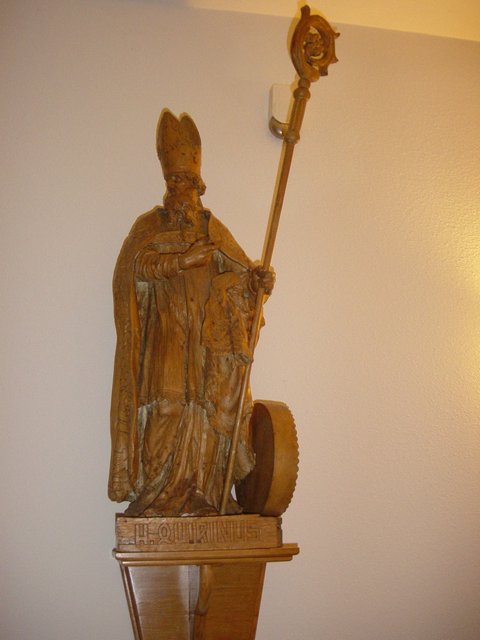
When Governor Amantius demanded Quirinus renounce Christ, the bishop refused. They bound him to a millstone and threw him into the Gyöngyös River—execution designed to obliterate all trace. Yet legend says something miraculous occurred: he freed himself from the stone and continued preaching. Whether literal or symbolic, the truth remains: they could not silence him. Quirinus became a living paradox—more powerful in witness than in any position of authority. His martyrdom in 309 AD didn't end his story; it amplified it across centuries.
Why People Pray to Quirinus of Sescia
Today, Quirinus speaks to those paralyzed by impossible circumstances. When fear threatens to silence your convictions, when systems demand compromise of your deepest values, Quirinus reminds us that faith transcends survival logic. People pray to him when facing persecution—whether religious oppression, workplace discrimination, or family pressure to abandon conscience. He teaches that even in captivity, transformation is possible. His conversion of Marcellus reveals the saint's deeper power: the ability to reach the humanity in those sent to destroy you.
Lasting Impact
Quirinus became a symbol of unbreakable faith across three continents. Venerated in Rome's San Sebastiano basilica and honored as patron of Sisak, Croatia, his feast day (June 4) reminds believers that martyrs are not distant relics but living witnesses. His millstone—meant for drowning—became his symbol, transforming an instrument of death into a sign of liberation. Nearly 1,700 years later, Quirinus still inspires those who refuse to let systems silence their souls.