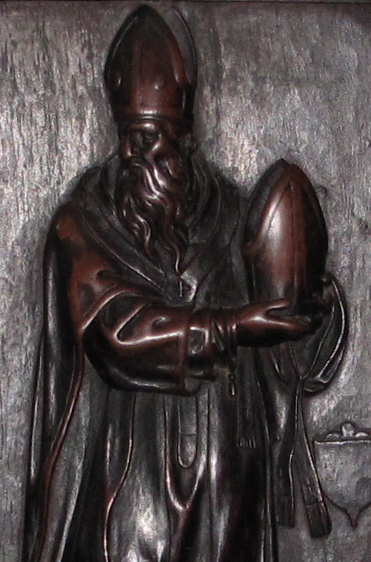
Their Story
History barely remembers Protasius—and that anonymity itself reveals his struggle. Born into an obscure life in 4th-century Milan, he faced what many spiritual seekers face: the weight of invisibility. Elected bishop in 328 AD, he inherited leadership of a fractured church torn apart by theological warfare. The Arian controversy raged across the empire, and emperors themselves demanded bishops bend their doctrine for political survival. Protasius could have faded into comfortable obscurity, managing his diocese quietly. Instead, he chose the harder path.
By 342 AD, Protasius stood beside Athanasius of Alexandria in the palace of Emperor Constantius II—a moment of terrifying vulnerability. The emperor favored the Arian position; bishops who resisted faced exile, humiliation, even death. Yet Protasius attended the Council of Sardica in 343 AD and put his name to its decrees, explicitly rejecting Arianism and defending the Council of Nicaea's orthodox faith. This wasn't heroic grandstanding. It was a quiet, resolute act of conscience against imperial pressure.
He died that same year, around 343 AD, having served only fifteen years—a brief, unmemorable tenure by worldly standards. But those years mattered. Protasius proved that holiness isn't about fame or longevity; it's about choosing truth when silence would be safer. He transformed his anonymous life into a witness: that one person standing firm in conviction can shape the faith for centuries to come.
Why People Pray to Protasius of Milan
In our age of compromise and invisible pressure to conform, Protasius speaks to anyone facing a choice between comfort and conscience. People pray to him when they must take an unpopular stand at work, in their community, or within their own families. He intercedes for the unnoticed, the overlooked, and those whose quiet faithfulness will never make headlines. Protasius reminds us that true courage isn't loud—it's the steady refusal to bend when it matters most.
Lasting Impact
Protasius left no writings, no dramatic miracles, no revolutionary reforms. Yet his legacy endures: a bishop remembered not for popularity but for integrity. Venerated across Catholic, Orthodox, Lutheran, and Anglican traditions, his feast day (November 24) honors the quiet saints—those who held the line when the stakes were invisible but eternal. He remains a beacon for ordinary people called to extraordinary faithfulness.