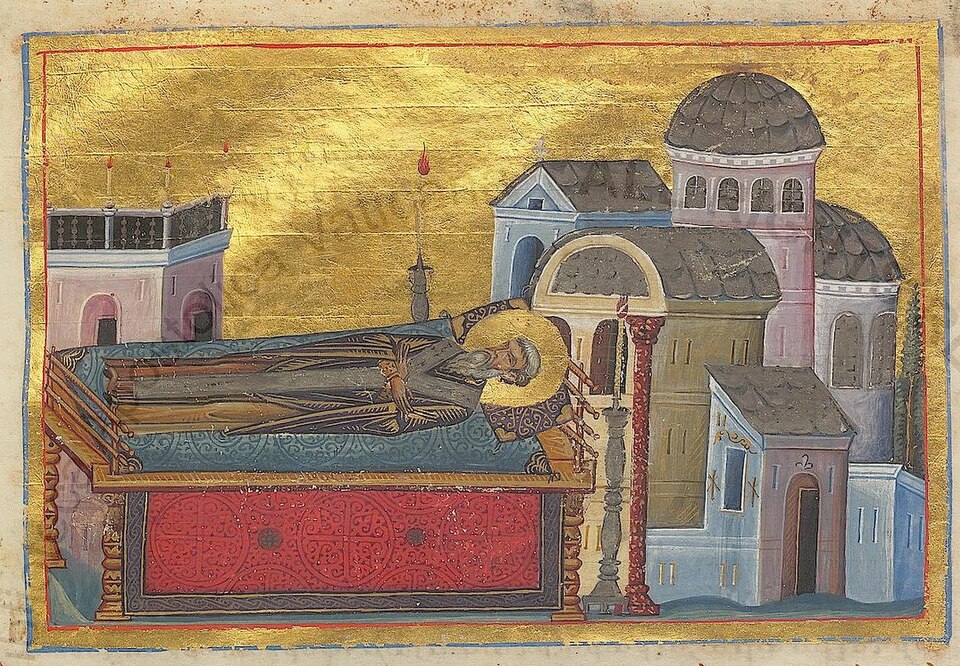
Their Story
Proclus arrived in Constantinople as an ambitious young scholar with everything to prove. He studied under the greatest minds—rhetorical masters, classical philosophers, brilliant Alexandrian thinkers—yet success felt hollow. The ambitious reader struggled with pride, wrestling with the tension between his intellectual gifts and genuine spiritual depth. In a city torn apart by the Nestorian controversy—a theological conflict that threatened to shatter the Church itself—Proclus faced his greatest test: Could words alone heal what doctrine had fractured?
At first, he tried. His sermons grew famous for their eloquence, but eloquence wasn't enough. The controversy demanded more than beautiful language; it demanded theological precision married with pastoral compassion. This is where Proclus transformed. Rather than choosing sides with arrogance, he became a bridge-builder. He studied deeply, listened intently, and spoke with a rare combination of intellectual rigor and spiritual humility. His homilies became legendary not for flowery rhetoric, but for their ability to illuminate mystery while holding opposing voices in tension.
When he became Archbishop in 434, Proclus brought this hard-won wisdom to Constantinople's fractured church. He became foremost among Marian theologians, developing profound theology of the Virgin Mary that honored both Christ's divinity and Mary's crucial role—a balance that seemed impossible to achieve. For twelve years, he led with both conviction and gentleness, proving that a scholar's greatest power isn't winning arguments, but illuminating truth in ways that transform hearts.
Why People Pray to Proclus of Constantinople
People turn to Proclus today when navigating impossible theological or philosophical questions, or when struggling to communicate complex truths with both integrity and compassion. He's the saint for those who feel the tension between intellectual honesty and spiritual faith—for scholars seeking wisdom beyond mere knowledge, and for anyone trying to build bridges across seemingly unbridgeable divides. His life teaches that precision and mercy aren't opposites.
Lasting Impact
Proclus established theological foundations for Marian devotion that shaped Christian thought for centuries. His homiletic method—combining rigorous scholarship with spiritual depth—became a model for patristic theology. He demonstrated that ecclesiastical leadership rooted in both intellectual courage and pastoral tenderness can heal even severe doctrinal wounds, leaving a legacy of reconciliation.