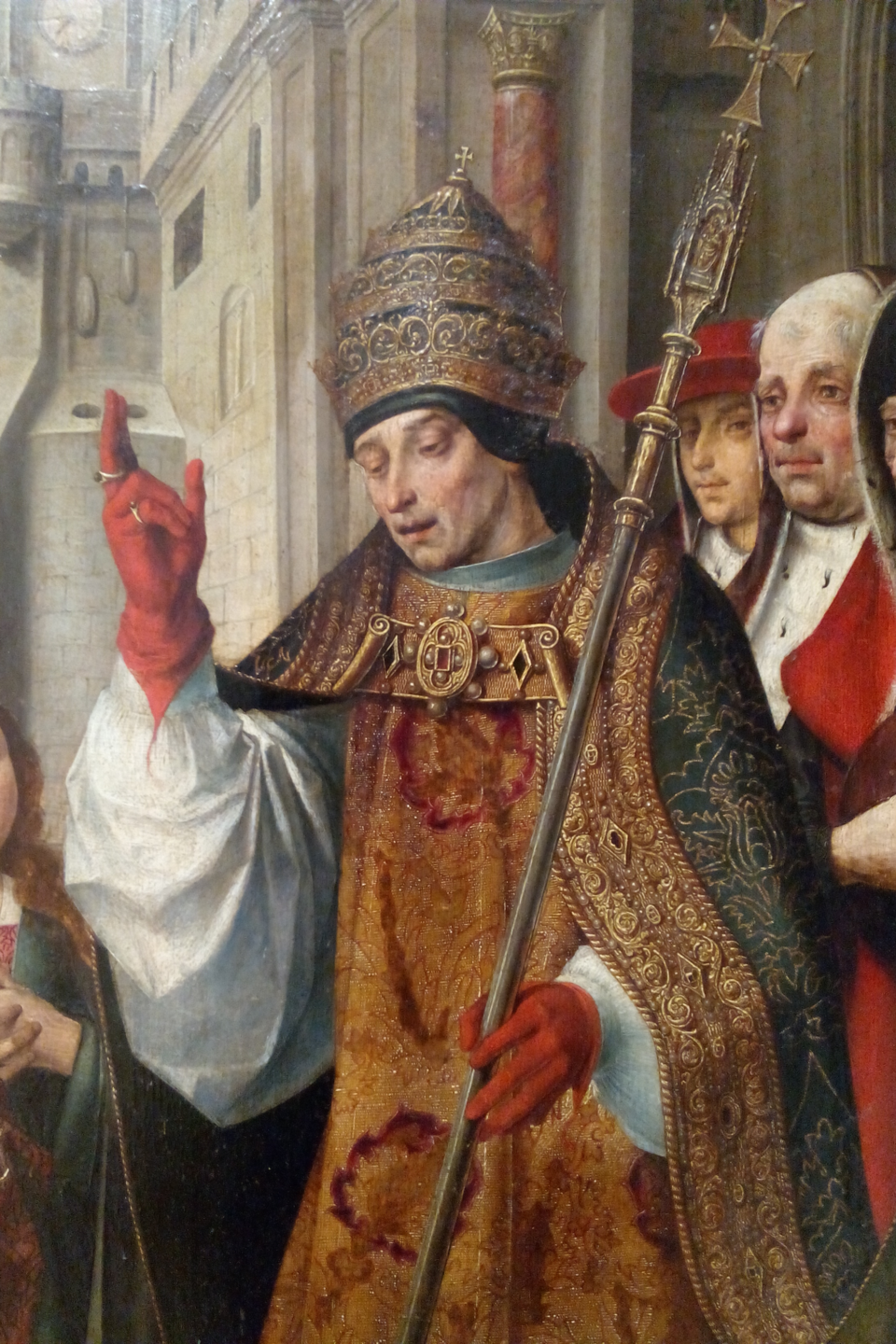
Their Story
Siricius began his spiritual journey as a young man in Rome, climbing slowly through the ranks—first as a lector, then deacon—under the watchful eye of popes before him. For decades, he served in obscurity, watching the Church splinter under competing voices and regional disorder. He wasn't a dramatic visionary or fiery preacher. He was a bureaucrat, a rule-keeper in an age that desperately needed one. Many questioned whether a cautious administrator could guide the Church through its most turbulent era.
When Siricius was elected pope in 384, he inherited chaos. Rival factions challenged his authority. The antipope Ursinus threatened to split Rome's loyalty. Yet Siricius refused to panic or compromise. Instead, he did something radical: he listened. When Bishop Himerius of distant Tarragona wrote seeking guidance, Siricius responded with the *Directa Decretal*—the first completely preserved papal decrees. These weren't abstract philosophy; they were practical answers about baptism, discipline, celibacy, and sacred order.
His fifteen-year papacy became a masterclass in patient authority. Siricius asserted the Pope's role as binding judge over the entire Church, establishing precedent for papal governance that would endure centuries. He wasn't the most celebrated pontiff, but he was the one who made the Church functional when it could have shattered. He died in 399, having transformed the papacy from an honored office into an institutional authority. His legacy wasn't heroic drama—it was the unglamorous work of creating systems that held faith together.
Why People Pray to Pope Siricius
People seek Siricius when facing overwhelming organizational challenges or when doubt whispers that quiet, steady work lacks spiritual meaning. In our fragmented age, he reminds us that structure itself is sacred—that creating order from chaos is holy labor. Leaders, administrators, and those rebuilding broken systems pray to him for patience, wisdom, and the courage to lead through careful discernment rather than charisma.
Lasting Impact
Pope Siricius established the papal decretal as a governing instrument, cementing the Pope's role as supreme Church authority. His *Directa* remains Christianity's earliest complete preserved papal letters. He formalized clerical celibacy and Church discipline, creating institutional frameworks that stabilized Christianity through its most vulnerable century. His methodical governance prevented schism and established precedent for papal authority that endures today.