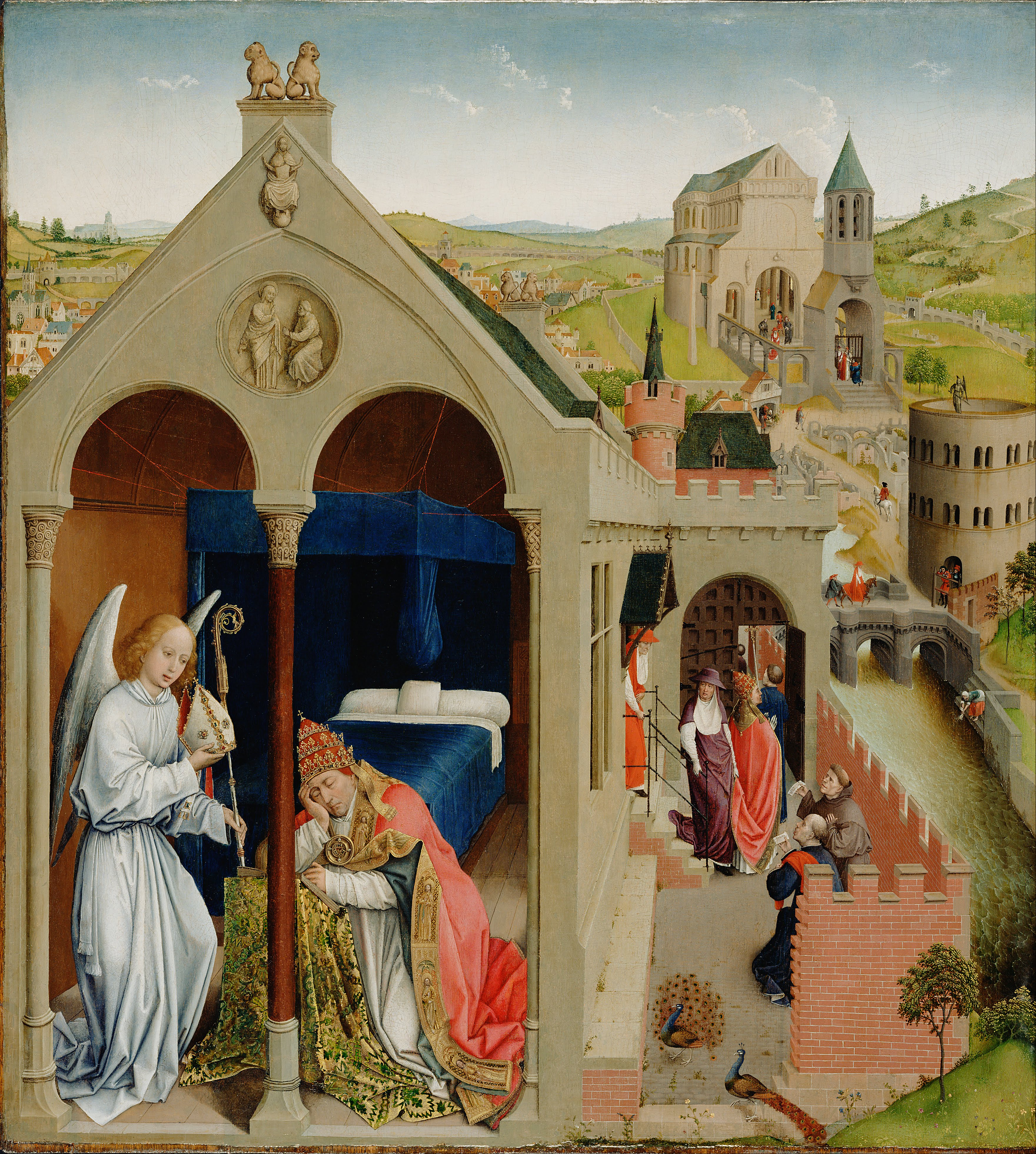
Their Story
Sergius I was a displaced person. Born around 650 in Palermo, Sicily, he watched his homeland torn apart by Caliphate attacks. Like thousands of refugees fleeing religious and political violence, he abandoned everything familiar and journeyed to Rome as a stranger in a foreign city. He arrived carrying the weight of displacement—a man without home, without security, searching for purpose in an uncertain world.
For decades, Sergius worked quietly in Rome's ecclesiastical ranks. He rose through the Church not through ambition, but through faithful service, eventually becoming Cardinal-Priest of Santa Susanna. But his greatest test came unexpectedly in 687 when rival factions fought over the papacy itself. In the midst of this chaos, Sergius was elected—thrust into leadership precisely when he never sought it. The real conflict came when Emperor Justinian II demanded he accept the Quinisext Council's controversial canons. Sergius refused. He chose principle over political survival, knowing the emperor could destroy him.
The turning point revealed his true strength: when Justinian ordered his arrest, the Roman people and their militia refused to obey. A refugee became their champion. A man once displaced became their protector. For fourteen years, Sergius led with quiet conviction, never wavering despite imperial pressure. He transformed his vulnerability—his immigrant status, his initial powerlessness—into moral authority that no throne could shake. He proved that integrity, not position, commands real power.
Why People Pray to Pope Sergius I
People turn to Sergius I when facing impossible choices between conscience and security, when power demands compromise. He speaks to immigrants and refugees—those who've lost everything and must rebuild identity in new lands. In our fractured world, his refusal to bend under pressure inspires those who must choose truth over survival, and his example shows how communities protect those who stand for what's right.
Lasting Impact
Sergius I demonstrated that the Church's strength lies not in political accommodation but in moral clarity. His steadfast refusal to capitulate to imperial pressure—and the people's willingness to defend him—established that religious authority transcends secular power. He remains a symbol of principled leadership that refuses to compromise conscience for convenience, inspiring defenders of faith and freedom across centuries.