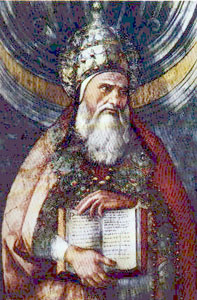
Their Story
Pius arrived at his calling in an age of profound uncertainty. Born in late 1st-century Aquileia, he inherited a Church fractured by competing doctrines—false teachers claiming secret knowledge, philosophical systems threatening to corrupt Christ's simple message. The weight of leadership terrified him. How could one man, thrust into the role of Bishop of Rome around 140 AD, guide millions through spiritual chaos? Doubt whispered: Was he worthy? Did he understand enough?
Yet something shifted in Pius. Rather than retreating into fear, he chose clarity. He studied deeply, confronted the Valentinians and Gnostics directly, and refused to let confusion masquerade as truth. He didn't have all the answers—none of them did—but he had something more precious: unwavering conviction that Christ's message was meant for everyone, not hidden in secret doctrines for the elite. This was a radical stand in a world seduced by complexity.
For fourteen years, Pius held the line. He wrote, he shepherded, he made decisions that would ripple through centuries. His vulnerability—the very doubt that nearly crushed him—became his strength. Because Pius knew his own limitations, he leaned entirely on faith. He taught the Church not through grandeur but through humble persistence, showing that ordinary people could stand against extraordinary pressure. When he died around 154 AD, the Church was bloodied but unbroken, its identity clarified.
Why People Pray to Pope Pius I
Catholics and seekers today pray to Pius I when facing doctrinal confusion, professional isolation, or the weight of defending truth in hostile environments. He intercedes for teachers, clergy, and anyone called to stand firm in conviction despite self-doubt. In an age of relativism and spiritual confusion, Pius reminds us that clarity rooted in faith—not arrogance—is a gift worth defending, even at great cost.
Lasting Impact
Pope Pius I established the papacy as a guardian of doctrinal integrity during Christianity's most vulnerable period. His firm yet compassionate approach to combating heresy became the template for Church leadership for centuries. He proved that holiness requires not perfection, but unwavering commitment to truth spoken with love.